NYT Pips Hints & Answers for March 27, 2026

Mar 27, 2026

🚨 SPOILER WARNING

This page contains the final **answer** and the complete **solution** to today's NYT Pips puzzle. If you haven't attempted the puzzle yet and want to try solving it yourself first, now's your chance!

Click here to play today's official NYT Pips game first.

Want hints instead? Scroll down for progressive clues that won't spoil the fun.

🎲 Today's Puzzle Overview

Today's Pips puzzle for March 27, 2026 comes from editor Ian Livengood, who constructed both the Easy and Medium grids himself, with the challenging Hard puzzle contributed by constructor Rodolfo Kurchan. Each difficulty level presents a distinct grid shape and a fresh set of dominoes, so the reasoning path shifts dramatically as you move up.

The Easy puzzle's plus-shaped grid is quietly elegant: five dominoes, two zero-pip cells, and a central equals pairing that locks in the solve once you identify which dominoes carry blank faces. The Medium grid opens up to eight tiles across a wider field where a single high-sum constraint on four connected cells becomes the anchor that ties the whole puzzle together.

Kurchan's Hard puzzle is a frame-shaped board of thirteen dominoes with a striking number of equals regions — left column, right column, interior rows, and the bottom edge all demand internal consistency. Working through it teaches a key Pips skill: when a region of cells must all show the same pip, the doubles in your set often point directly to where to start.

💡 Progressive Hints

Try these hints one at a time. Each hint becomes more specific to help you solve it yourself!

💡 Follow the strictest constraint
Look for cells with a sum constraint that can only be satisfied by one specific pip value — those are your clearest entry points into the puzzle.
💡 Two blanks, two locations
Two separate cells share the same type of sum constraint, and each one requires the same pip value. Check which dominoes in today's set carry that value — you'll need two of them, one for each cell.
💡 Full solution
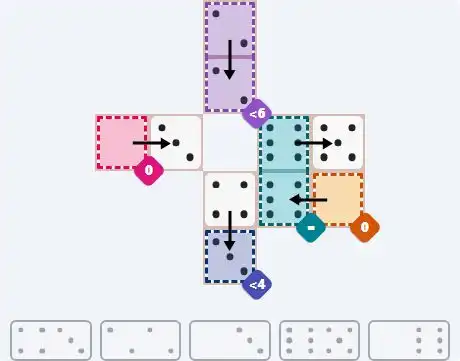
Place [0|3] horizontally along the left arm of the middle row — the blank face points outward. Place [0|6] in the bottom-right corner with the blank at the tip and the 6 facing inward to satisfy the equals pair. [6|5] slides horizontally into the right half of the middle row with the 6 leading. [2|2] drops into the upper two cells of the central column, and [4|3] finishes it below — 3 pointing down where it needs to be less than 4.
💡 Find the zero cells first
Two cells each carry a sum constraint that forces a very specific pip value. Spotting those two cells — and recognising what value they need — is the key to unlocking the whole puzzle.
💡 Match each blank to its cell
You need a blank pip in two separate locations, and you have exactly two dominoes that carry one. Place each where it belongs, then check the equals constraint in the center to figure out the correct orientation for both.
💡 Full solution
Place [0|3] horizontally across the left arm of the middle row — blank on the far left, 3 pointing inward. Place [0|6] along the bottom-right corner cells — blank at the end, 6 next to the center for the equals match. [6|5] completes the right side of the middle row with 6 meeting the equals cell. [2|2] sits vertically in the upper half of the central column, and [4|3] finishes it below — 3 at the base, safely under the less-than-4 marker.
💡 Spot the anchor cells
Two cells have sum constraints that point directly to a single pip value. Find those cells before placing anything else — they anchor the rest of the solve.
💡 Two blanks, two places
With two zero-sum cells and two dominoes that carry a blank pip, the match is one-to-one: each blank domino satisfies exactly one cell. Commit to placing both, then see what the equals constraint in the center tells you about the adjacent cell.
💡 The equals constraint speaks
Once the two blank-pip dominoes are placed, the equals constraint in the center reveals what pip the neighboring horizontal cell must show. Only one remaining domino can deliver that value to that spot.
💡 Fill the column
Three dominoes are placed. The remaining two fill the vertical column through the center. The less-than constraint at the bottom cell and the less-than constraint on the top pair together determine exactly which domino goes at the top and which at the bottom.
💡 Full solution
Place [0|3] in the horizontal left arm — blank facing out. Place [0|6] in the bottom-right corner — blank at the tip, 6 pointing inward for the equals match. [6|5] fills the right side of the middle row, 6 leading. [2|2] takes the top of the central column (sum of 4, comfortably under 6). [4|3] takes the bottom — 3 at the base, satisfying less than 4.

🎨 Pips Solver

Mar 27, 2026

Click a domino to place it on the board. You can also click the board, and the correct domino will appear.
Final Answer & Complete Solution For Hard Level

The key to solving today's hard puzzle was identifying the placement for the critical dominoes highlighted in the starting grid. Once those were in place, the rest of the puzzle could be solved logically. See the final grid below to compare your solution.

Starting Position & Key First Steps
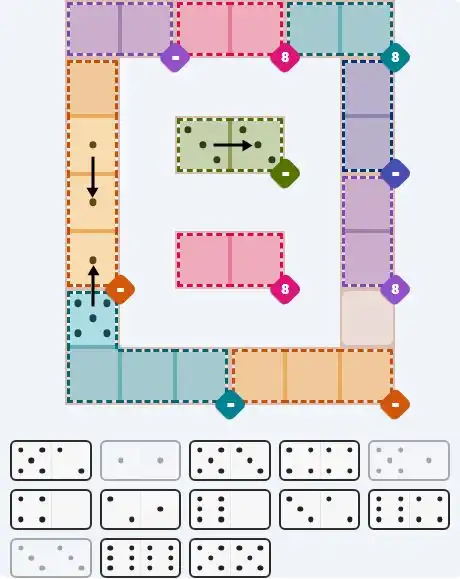
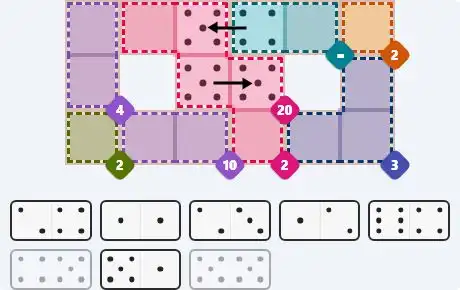
Pips hint for March 27, 2026 – hard level puzzle grid with critical first placements and strategy

This image shows the initial puzzle grid for the hard level, with a few critical first placements highlighted.

Final Answer: The Solved Grid for Hard Mode
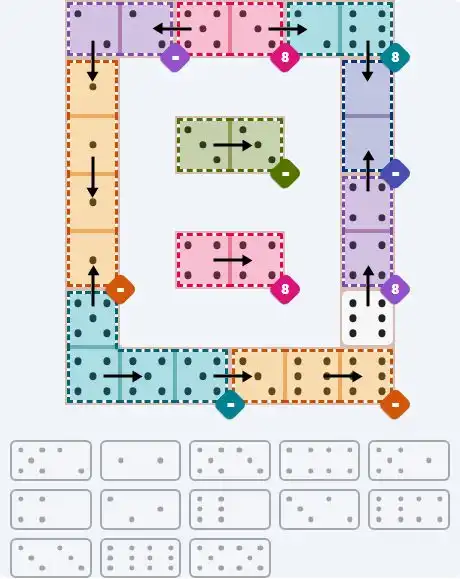
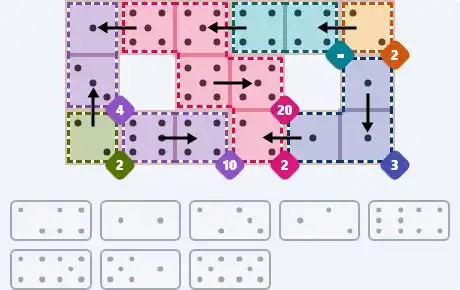
NYT Pips March 27, 2026 hard puzzle full solution grid showing final answer with hints

Compare this final grid with your own solution to see the correct placement of all dominoes.

🔧 Step-by-Step Answer Walkthrough For Easy Level

1
Step 1: Find the zero cells
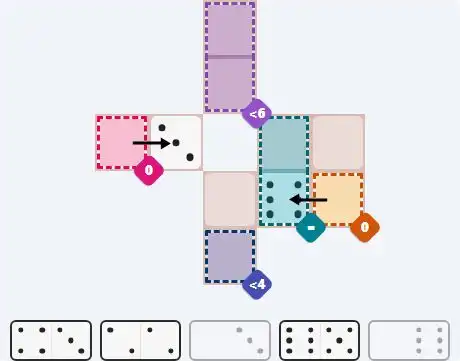
The lone cell at the far left of the middle row carries a sum-equals-zero constraint. A pip of zero is the only value that works, so whichever domino lands here must place its blank face there. Scan today's five dominoes for any that include a blank — you'll find two candidates: [0|3] and [0|6].
2
Step 2: Commit both blank dominoes
The same zero constraint appears again at the far end of the lower-right arm. You need a blank pip there too. Since you have exactly two blank-carrying dominoes and now have two mandatory blank cells, each one is already spoken for — one per zero cell. Neither can go anywhere else in the grid.
3
Step 3: Resolve the equals pair
Look at the equals constraint that pairs the center-right cell of the middle row with the cell diagonally below it. If [0|6] fills the bottom-right arm with its blank pointing outward, the 6 face lands on the cell that forms one half of the equals pair. That forces the other cell to also show 6. The only remaining domino that can place a 6 at that center-right position is [6|5], running horizontally across the right side of the middle row.
4
Step 4: Place the last blank domino
[0|3] now fills the left arm: its blank goes to the zero-constraint cell on the far left, and its 3 points inward. Three dominoes are placed. Only [4|3] and [2|2] remain, and they must share the vertical column running through the center of the grid.
5
Step 5: Finish the column
The two cells at the top of the column are constrained to sum to less than 6. [2|2] placed there gives 2+2=4, which clears the limit comfortably. [4|3] placed there would give 7, which fails. So [2|2] takes the top, and [4|3] takes the bottom. The very bottom cell must be less than 4: with [4|3] oriented so the 3 points down, the bottom cell reads 3 — satisfying 3 < 4. Puzzle solved.

🔧 Step-by-Step Answer Walkthrough For Medium Level

1
Step 1: Anchor the high-sum region
The four connected cells near the top-center must sum to 20. With a maximum of 6 per cell, hitting 20 across four cells requires uniformly high values — specifically, all four showing 5. The only double-5 domino in today's set is [5|5]. Place it across the two middle cells of that group, locking both to 5. That means the two flanking cells must also each show 5.
2
Step 2: Follow the fives outward
The left outer cell of the sum-of-20 group must show 5. The [5|1] domino delivers this: place it so its 5 lands on that outer cell and its 1 falls on the cell immediately to the left. That cell is the upper half of a column pair that must sum to 4 — with 1 at the top, the lower half needs to show 3.
3
Step 3: Fill the left column
The lower half of that left column pair needs a 3, and the standalone cell at the bottom of the column needs a 2. A vertical [2|3] domino fits exactly: place it so its 3 sits at the top of the slot and its 2 anchors the bottom, satisfying both the sum-of-4 pair and the sum-of-2 single cell in one move.
4
Step 4: Resolve the top-right equals pair
The top-right corner cell needs a value of 2 (it carries a sum-of-2 constraint), and the two cells just left of it have an equals constraint — both must show the same pip. [2|4] placed horizontally puts its 2 at the top-right corner and its 4 one cell over. The equals neighbor must also show 4, which is where [4|5] comes in: its 4 completes the equals match, and its 5 fills the outer cell of the sum-of-20 group on the right side.
5
Step 5: Close out the bottom row
The bottom inner cell needs a 2 — [1|2] delivers it, placing its 2 there and its 1 at the adjacent bottom corner. That corner is part of a three-cell region summing to 3; with 1 already there, the remaining two cells in the region need to sum to 2. [1|1] placed vertically down the right column contributes 1+1=2, bringing the three-cell total to exactly 3. Finally, [6|4] fills the bottom inner pair — 6 and 4 summing to 10 as required.

🔧 Step-by-Step Answer Walkthrough For Hard Level

1
Step 1: Lock in the left column
Four consecutive cells down the left column — rows 1 through 4 — must all show the same pip. To fill two of them with matching values from a single tile, you need a double. Place [1|1] vertically at rows 2 and 3 of the left column, fixing both cells to 1. That value propagates: rows 1 and 4 of the column must also show 1, constraining which dominoes can occupy those slots.
2
Step 2: Extend the left column equals
Row 4 of the left column needs a 1. [5|1] placed vertically spanning rows 4 and 5 of the column delivers its 1 at row 4 and its 5 at row 5. Row 1 of the column also needs a 1. [2|1] placed vertically at rows 0 and 1 of the leftmost column puts its 1 at row 1 and its 2 at row 0.
3
Step 3: Work across the top row
Row 0, column 0 now shows 2. The top-left equals pair (columns 0 and 1) requires column 1 to also show 2. Place [5|2] horizontally in row 0 across columns 2 and 1 — its 2 lands at column 1, its 5 at column 2. The sum-of-8 constraint on columns 2 and 3 of row 0 is half resolved: column 2 = 5, so column 3 must be 3. Place [3|2] horizontally across columns 3 and 4 — its 3 at column 3 and its 2 at column 4.
4
Step 4: Resolve the right side
Row 0 columns 4 and 5 must sum to 8. Column 4 shows 2, so column 5 needs 6. Place [6|0] vertically down column 5 at rows 0 and 1 — its 6 at row 0, its 0 at row 1. The equals constraint on rows 1 and 2 of column 5 forces row 2 to also show 0. Place [4|0] vertically at rows 2 and 3 of column 5 — its 0 at row 2 and its 4 at row 3.
5
Step 5: Fill the interior and lower right
The inner equals region at row 2, columns 2 and 3 requires both cells to match. Place [3|3] horizontally there — a clean 3=3. The row-4 inner cells at columns 2 and 3 must sum to 8. Place [4|4] horizontally — 4+4=8. For the lower right column: rows 3 and 4 of column 5 must sum to 8. Row 3 already holds 4 from [4|0], so row 4 needs 4 as well. Place [6|4] vertically at rows 5 and 4 of column 5 — its 6 at row 5 and its 4 at row 4.
6
Step 6: Finish the bottom row
The bottom-left equals group spans row 5 column 0 and the first three cells of row 6, all of which must match. Row 5, column 0 shows 5 (placed earlier with [5|1]), so those three bottom cells must also be 5. Place [5|5] across row 6, columns 0 and 1 — both showing 5. Place [5|3] across columns 2 and 3 — its 5 completes the equals group at column 2 and its 3 fills column 3. The last domino, [6|6], takes the final two cells of row 6. Puzzle complete.

💡 Pro Tips for Similar Puzzles

Start with Constraints
Always begin with the most constrained regions - sum regions with small numbers or tight spaces.
Use Equal Regions
Use "equal" regions as anchors - they eliminate many possibilities quickly.
Work Systematically
Let the rules guide your placement rather than guessing randomly.
Double-Check
Verify each region's rules are satisfied before moving to the next.

🎓 Keep Learning & Improve