NYT Pips Hints & Answers for November 7, 2026

Nov 7, 2026

🚨 SPOILER WARNING

This page contains the final answer and the complete solution to today's NYT Pips puzzle. If you haven't attempted the puzzle yet and want to try solving it yourself first, now's your chance!

Click here to play today's official NYT Pips game first.

Want hints instead? Scroll down for progressive clues that won't spoil the fun.

SEE ALSO:

🎲 Today's Puzzle Overview

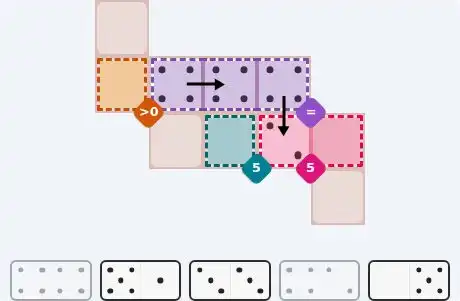
Easy (Ian Livengood) is a five-tile confidence-builder on a ten-cell snake: one equals run of three, a sum-5 pair, a sum-5 single cell, an orange greater-0 cell and three free squares. There is no bottleneck to speak of — count the pips in the tray once, spot the value that turns up three times, and the equals run answers itself. Two of the free squares sit at the ends of the board with only a single neighbour each, which is what makes the first and last placements feel so clean.

Medium (also Livengood) is where today's NYT Pips starts to bite: seven tiles, two equals pairs, a greater-9, a greater-8 and a sum-8 packed onto fourteen cells. The bottleneck is the left edge — the orange less-2 cell has exactly one neighbour, so it commits on move one and drags the teal greater-9 along with it. Once the two big pips are spent along the top, the top row unzips left to right like a zipper and the bottom row follows behind.

Hard (Rodolfo Kurchan) is a different animal: thirty-two cells, thirty-one single-cell sum targets and one free square, with no equals or inequality anywhere to lean on. Every cell's pip is fixed by its own label, so the puzzle is really a matching problem — which pairs of neighbours can be joined by a tile that actually exists in the tray. Expect the opening minute to feel inert; the lone 6 and the five zeros are what crack it open.

💡 Progressive Hints

Try these hints one at a time. Each hint becomes more specific to help you solve it yourself!

💡 Start with the strongest constraint type
Of all the constraint types on this board, one does far more work than the rest: 'equals'. A region where every cell must show the same pip is a much heavier statement than any small sum, so hunt for the equals region first and let it drive everything else.
💡 The purple run of three across the top
The purple equals region is a horizontal run of three cells near the top. Three cells, one repeated pip — so tally the tray before you place anything. Across the five tiles only a single value turns up three times; that value has to fill the whole run. The pink sum-5 pair on the right then lives off whatever is left.
💡 Full solution, tile by tile
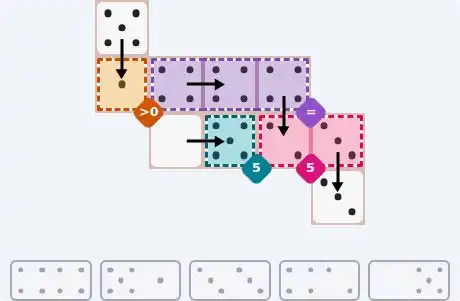
The purple run holds three 4s: the 4/4 double lies flat across its left and middle cells, and the 4/2 stands vertically with its 4 in the run's right cell, its 2 dropping into the pink sum-5 pair. The pink's other cell takes the upper half of the 3/3 double, whose lower half continues into the bottom-right free square. The 5/1 stands upright in the top-left: 5 in the corner free square, 1 in the orange greater-0 cell below it. Last, the 0/5 lies flat across the middle row — 0 in the left free square, 5 in the teal sum-5 cell.
💡 Look at the inequalities first
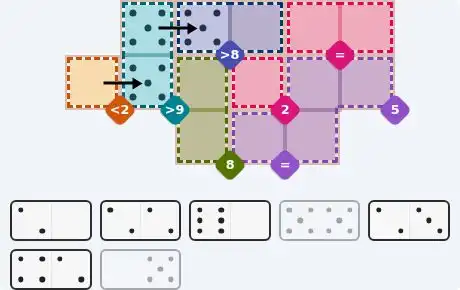
This board mixes two equals pairs with three inequality regions. Ignore the sums for a minute: the 'greater' regions are the tightest things here, because they refuse anything small. Start your scan at the pair that has to beat the biggest number, then work outwards.
💡 The dead-end cell on the left edge
The orange less-2 cell on the left edge has only one neighbour — the lower cell of the teal greater-9 column beside it. Those two cells must therefore form a single domino. Whatever lands there feeds the greater-9, and the column's upper cell then has to be big enough for the pair to beat 9.
💡 Full solution, tile by tile
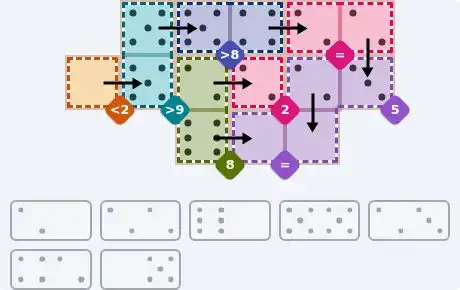
The teal greater-9 column takes two 5s: the 5/5 lies flat, its left half in the teal's upper cell and its right half in the blue greater-8 beside it; the 0/5 runs in from the left edge, 0 in the orange less-2 and 5 in the teal's lower cell — total 10. Blue then needs the 4/2's 4 on its right cell (9 total), parking the 2 in the pink equals top-right, whose other cell takes the 2 from the 2/3 standing upright, its 3 falling into the purple sum-5. The 2/0 stands vertically: 2 in the purple sum-5's left cell, 0 down in the purple equals bottom-right. The 6/0 lies flat with 6 in the green sum-8's lower cell and 0 in the purple equals' left cell, and the 2/2 finishes: 2 in the green's upper cell (2+6=8), 2 in the pink sum-2 centre.
💡 It's all one constraint type — think adjacency
Every region here is a single-cell sum, so there is no equals or inequality to lean on. That means the arithmetic is free: the puzzle is really about which pairs of neighbouring cells can be joined by a tile in the tray. Read the labels, then look for adjacencies that are simply impossible.
💡 Count the labels against the tray
Tally the targets: five cells want 0, five want 1, five want 2, six want 3, five want 4, five want 5 — plus one unconstrained square. The tray matches those counts exactly, so nothing is left to guesswork. Also note the tray holds no doubles at all: no domino may ever join two cells carrying the same label.
💡 The 6 has only one home
The tray's only 6 sits on the 3/6, and every coloured cell is pinned to a target of 5 or less. So the 6 must live in the uncoloured free square on the left edge. Its partner has to be a 3, and of that square's two neighbours only the blue sum-3 cell on its right wants one — the 3/6 lies flat, 6 in the free square, 3 in the blue cell beside it.
💡 The zeros are your spine
Five tiles carry a zero and there are exactly five sum-0 cells, so each of the 0/1 through 0/5 plants its zero in one of them, with the partner landing on a neighbour whose label matches. Corners narrow fastest: the purple sum-4 corner at the top-left has two neighbours and both of them want a 2, so the 2/4 lies flat there — 4 in the purple corner, 2 in the pink sum-2 next to it.
💡 Full layout, section by section
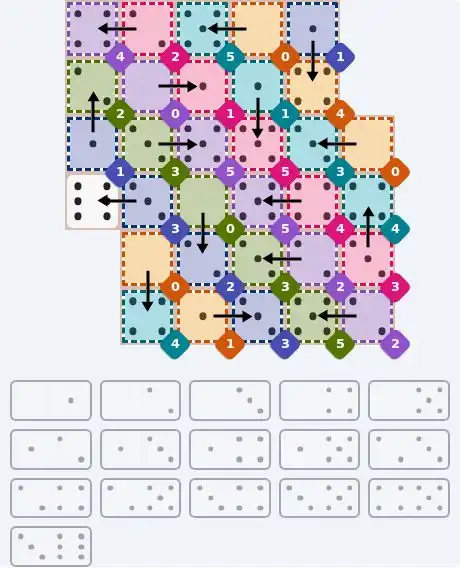
Top: the 2/4 lies flat in the corner — 4 in the purple sum-4, 2 in the pink sum-2 beside it; the 0/5 lies flat too, 5 in the teal sum-5 at the top and 0 in the orange sum-0 to its right; the 1/4 stands upright at the top-right, 1 up in the blue sum-1 and 4 down in the orange sum-4. Second row: the 1/2 stands vertically on the left edge, 2 up in the green sum-2 and 1 down in the blue sum-1; the 0/1 lies flat, 0 in the purple sum-0 and 1 in the pink sum-1 to its right; the 1/5 stands vertically, 1 up in the teal sum-1 and 5 down in the pink sum-5 below. Third row: the 3/5 lies flat, 3 in the green sum-3 and 5 in the upper of the two centre purple sum-5 cells; the 0/3 lies flat, 3 in the teal sum-3 and 0 in the orange sum-0 on the right edge. Fourth row: the 3/6 lies flat, 6 in the free square on the left edge and 3 in the blue sum-3 beside it; the 0/2 stands vertically, 0 up in the green sum-0 and 2 down in the blue sum-2; the 4/5 lies flat, 5 in the lower centre purple sum-5 and 4 in the pink sum-4 to its right; the 3/4 stands vertically on the right edge, 4 up in the teal sum-4 and 3 down in the pink sum-3. Fifth row: the 0/4 stands vertically, 0 up in the orange sum-0 and 4 down in the teal sum-4 at the bottom-left; the 2/3 lies flat, 3 in the green sum-3 and 2 in the purple sum-2 to its right. Bottom row: the 1/3 lies flat, 1 in the orange sum-1 and 3 in the blue sum-3 to its right; the 2/5 lies flat, 5 in the green sum-5 and 2 in the purple sum-2 at the far bottom-right corner.

🎨 Pips Solver

Nov 7, 2026

Click a domino to place it on the board. You can also click the board, and the correct domino will appear.

✅ Final Answer & Complete Solution For Hard Level

The key to solving today's hard puzzle was identifying the placement for the critical dominoes highlighted in the starting grid. Once those were in place, the rest of the puzzle could be solved logically. See the final grid below to compare your solution.

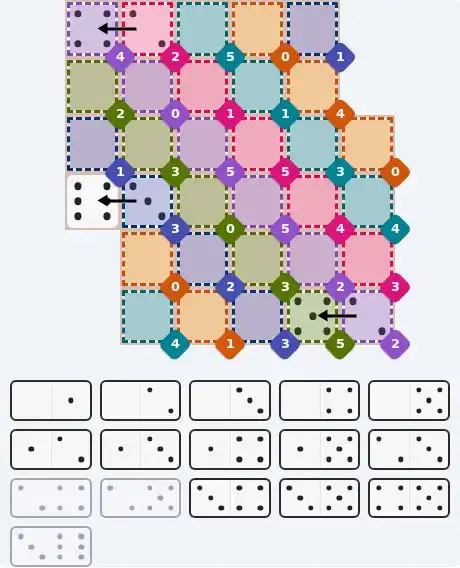
Starting Position & Key First Steps

Pips hint for November 7, 2026 – hard level puzzle grid with critical first placements and strategy

This image shows the initial puzzle grid for the hard level, with a few critical first placements highlighted.

Final Answer: The Solved Grid for Hard Mode

NYT Pips November 7, 2026 hard puzzle full solution grid showing final answer with hints

Compare this final grid with your own solution to see the correct placement of all dominoes.

🔧 Step-by-Step Answer Walkthrough For Easy Level

1
Step 1: Count the tray, not the grid
Every cell of the purple equals run near the top has to show the same pip, so tally the five tiles first. The 3 appears twice and the 5 appears twice, but only the 4 appears three times. That settles the run: three 4s. The 4/4 double lies flat across the run's left and middle cells.
2
Step 2: The corner that cannot be avoided
The free square tucked into the top-left corner touches exactly one other cell — the orange greater-0 cell just below it. Those two must be one domino. The 5/1 stands upright there, 5 in the free corner square and 1 in the orange cell (which is happy, since it only needs to beat zero).
3
Step 3: The end of the run and the pink pair
The run's third cell now takes the 4 from the 4/2, standing vertically so its 2 drops into the pink sum-5 pair. Down at the bottom-right the free square is another dead end — it touches only the pink's right cell — so the 3/3 double stands upright there, 3 up in the pink and 3 down in the free square. The pink then reads 2 + 3, exactly its target.
4
Step 4: The last tile fills the middle
Only the 0/5 remains, and the two open cells are the left free square and the teal sum-5 cell beside it. The tile lies flat, 0 in the free square and 5 in the teal cell, which meets its target outright. Every region checks out: equals 4/4/4, pink 5, teal 5, orange above 0.

🔧 Step-by-Step Answer Walkthrough For Medium Level

1
Step 1: The dead-end cell on the left
The orange less-2 cell on the left edge has just one neighbour — the lower cell of the teal greater-9 column. Those two are therefore a single domino. The 0/5 lies flat there, 0 in the orange cell and 5 to its right in the teal's lower cell.
2
Step 2: The greater-9 column
With a 5 already in the column's lower cell, the upper cell has to push the total past 9. It pairs with the blue cell to its right across the top, and a 6 there would force a 0 into blue, which could never beat 8. So the 5/5 double lies flat: left half in the teal's upper cell, right half in blue's left cell — 5 + 5 = 10.
3
Step 3: Blue and the pink equals
Blue sits on 5 in its left cell, so its right cell needs a 4 to reach 9. The 4/2 supplies it, lying flat with 4 in blue and 2 continuing right into the pink equals pair at the top-right. Pink now demands a 2 in its outer cell, and the 2/3 stands vertically to deliver it — 2 up in the pink, 3 down in the purple sum-5 below.
4
Step 4: Down the right-hand column
The purple sum-5 pair is holding a 3, so its other cell needs 2. The 2/0 stands vertically, 2 in the sum-5's left cell and 0 dropping into the purple equals pair at the bottom-right. That equals pair now owns a second 0: the 6/0 lies flat beneath the green, 6 in green's lower cell and 0 in the equals pair's left cell.
5
Step 5: Green and the centre cell
Green's sum-8 pair already holds 6, so its upper cell needs 2. The 2/2 lies flat: left half in green's upper cell, right half stepping right into the single pink sum-2 cell in the middle of the board. That closes every region — teal 10, blue 9, orange below 2, both equals pairs matching, and all three sums on target.

🔧 Step-by-Step Answer Walkthrough For Hard Level

1
Step 1: Every label is also the answer
Because every region is a single-cell sum, each cell's pip is simply its target. Tally those targets and you get five 0s, five 1s, five 2s, six 3s, five 4s and five 5s, with one cell left over — and that is precisely the tray, tile for tile. So there is no arithmetic left to do; the whole puzzle is deciding which neighbours may be joined.
2
Step 2: Place the only 6
The 3/6 is the tray's sole 6, and every coloured cell is pinned to a value of 5 or less, so the 6 can only occupy the uncoloured free square on the left edge. The tile's other half must be a 3, and of that square's two neighbours only the blue sum-3 cell on the right wants one. The 3/6 lies flat: 6 in the free square, 3 in blue beside it.
3
Step 3: Corners, then the zeros
Five tiles carry a zero (0/1 through 0/5) and there are exactly five sum-0 cells, so each zero lands in one of them and its partner must match a neighbouring label. The purple sum-4 corner at the top-left is the cleanest: both of its neighbours want a 2, so the 2/4 lies flat along the top, 4 in the purple corner and 2 in the pink sum-2 to its right.
4
Step 4: Along the top and through row two
The teal sum-5 and the orange sum-0 next to it take the 0/5 lying flat, 5 on the left in teal, 0 on the right in orange. At the far top-right the 1/4 stands upright, 1 up in the blue sum-1 and 4 down in the orange sum-4. On the left edge of the second row the 1/2 stands vertically, 2 up in the green sum-2 and 1 down in the blue sum-1; the 0/1 lies flat to its right, 0 in the purple sum-0 and 1 in the pink sum-1; and the 1/5 stands vertically, 1 up in the teal sum-1 and 5 down in the pink sum-5.
5
Step 5: The middle band
In the third row the 3/5 lies flat, 3 in the green sum-3 and 5 in the upper of the two centre purple sum-5 cells; the 0/3 lies flat across the right side, 3 in the teal sum-3 and 0 in the orange sum-0 at the edge. Row four opens with the 3/6 already placed, then the 0/2 stands vertically, 0 up in the green sum-0 and 2 down in the blue sum-2. Further right the 4/5 lies flat, 5 in the lower centre purple sum-5 and 4 in the pink sum-4, and the 3/4 stands upright on the right edge, 4 up in the teal sum-4 and 3 down in the pink sum-3.
6
Step 6: The bottom two rows
Bottom-left, the 0/4 stands vertically: 0 up in the orange sum-0, 4 down in the teal sum-4. Beside it the 2/3 lies flat, 3 in the green sum-3 and 2 in the purple sum-2 to its right. On the last row the 1/3 lies flat with 1 in the orange sum-1 and 3 in the blue sum-3, and the 2/5 finishes the board, 5 in the green sum-5 and 2 in the purple sum-2 at the far bottom-right corner.
💡 Pro Tips for Similar Puzzles

Start with Constraints
Always begin with the most constrained regions - sum regions with small numbers or tight spaces.
Use Equal Regions
Use "equal" regions as anchors - they eliminate many possibilities quickly.
Work Systematically
Let the rules guide your placement rather than guessing randomly.
Double-Check
Verify each region's rules are satisfied before moving to the next.

🎓 Keep Learning & Improve