NYT Pips Hints & Answers for May 6, 2026

May 6, 2026

๐Ÿšจ SPOILER WARNING

This page contains the final **answer** and the complete **solution** to today's NYT Pips puzzle. If you haven't attempted the puzzle yet and want to try solving it yourself first, now's your chance!

Click here to play today's official NYT Pips game first.

Want hints instead? Scroll down for progressive clues that won't spoil the fun.

๐ŸŽฒ Today's Puzzle Overview

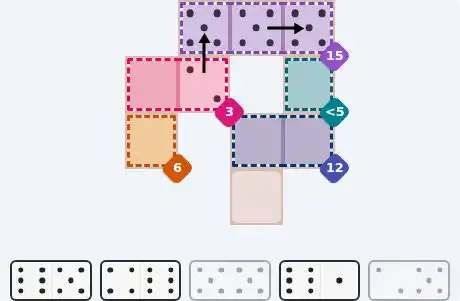
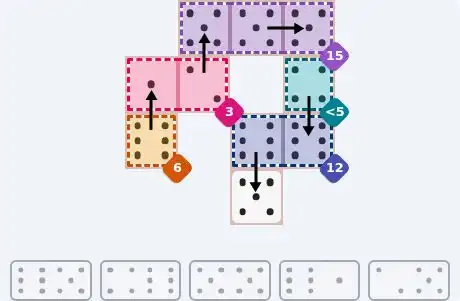
Today's NYT Pips easy, by Ian Livengood, features a crisp, linear elegance: a supreme sum-15 region across the top row that can only be fulfilled by a trio of 5s. This immediately places the double-5 domino and cascades downward, pairing a 5 from another domino to complete the top while simultaneously feeding a sum-3 two-cell region that deftly locks in a 1 and 2. The whole solve is satisfyingly deterministicโ€”every region sings in harmony.

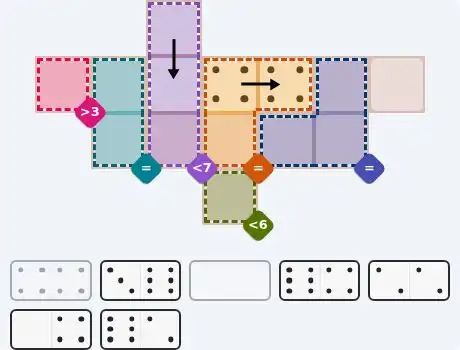
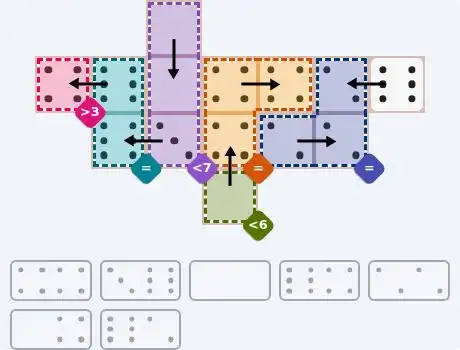
Rodolfo Kurchanโ€™s medium puzzle showcases his love for equals constructions. He crafts a lattice of three equals regionsโ€”four-cells, two-cells, and three-cellsโ€”interwoven with a less-than constraint column that forces low numbers. The double-4 and double-2 dominos become architectural keystones, while a double-0 slips into the less-7 zone. The result is a tidy interplay where each equality chain pulls the next into place.

For the hard puzzle, Kurchan raises the stakes with an extraordinary sum-0 region covering five cells, a rarity that dictates a wave of zeros across the board. The design then branches into a sum-9 pairing, equals-2, equals-4, and equals-6 chains, all anchored by careful domino placement. The grid transforms into a web of interdependence: the double-0 locks the sum-0 region, a [3,0] domino bridges to a sum-9 cell, and a [6,0] feeds a zero into the last free cell of the massive zero zone. This is Kurchan at his most architecturally ambitious, creating a puzzle that feels almost like a logic mosaic.

๐Ÿ’ก Progressive Hints

Try these hints one at a time. Each hint becomes more specific to help you solve it yourself!

๐Ÿ’ก Hint 1: Look for a demanding sum
Focus on sum constraints โ€” one is unusually high and will force a uniform set of pips.
๐Ÿ’ก Hint 2: The top row lock
The top row cells [0,1], [0,2], [0,3] must add to 15. Since dominoes max out at 6, every cell here must be 5. Find a domino that provides two 5s at once.
๐Ÿ’ก Hint 3: Solve the whole cascade
Place the double-5 domino on [0,2] and [0,3]. Cell [0,1] still needs a 5 โ€” use the [2,5] domino with 5 at [0,1] and 2 at [1,1]. The sum-3 region [1,0]-[1,1] now demands [1,0] be 1, so place [6,1] with 1 at [1,0] and 6 at [2,0] (satisfying the sum-6 there). Finally, fill the sum-12 region [2,2]-[2,3] with [4,6] on [1,3]-[2,3] (6 at [2,3], 4 at [1,3] meeting the less-5) and [6,5] on [2,2]-[3,2] (6 at [2,2], 5 at [3,2]).
๐Ÿ’ก Hint 1: Scout the equals zones
Investigate the equals regions โ€” one large group must share the same value, pointing straight to a specific double domino.
๐Ÿ’ก Hint 2: A triple-4 requirement
The equals region covering [1,3], [1,4], [2,3] needs three 4s. The [4,4] domino can cover two of them, so place it there first.
๐Ÿ’ก Hint 3: Weave the equals and less-than web
Place [4,4] on [1,3]-[1,4]. Then use the [0,4] domino to put 4 on [2,3] and 0 on [3,3] (the less-6 cell). For the less-7 column [0,2],[1,2],[2,2], place double-0 on [0,2]-[1,2] to keep values low. Next, the equals-6 pair [1,1],[2,1] takes [3,6] with 6 on [2,1] and 3 on [2,2] (still <7). That leaves [1,1] needing 6, so [6,4] goes on [1,1]-[1,0] (6 and 4, satisfying the greater-3 on [1,0]). Finally, the bottom-right equals-2 region ([1,5],[2,4],[2,5]) uses the double-2 on [2,4]-[2,5], and [6,2] on [1,6]-[1,5] to put 2 at [1,5] and 6 at the empty cell [1,6].
๐Ÿ’ก Hint 1: A rare sum-zero
The puzzle contains a massive sum-0 region โ€” a rarity that forces every cell inside it to be zero. Find its full extent.
๐Ÿ’ก Hint 2: The double-zero anchor
That sum-0 region spans [0,1], [0,2], [0,3], [1,1], and [2,1]. The only domino with two zeros is [0,0]; it must cover two of these cells.
๐Ÿ’ก Hint 3: Bridge to the sum-9 neighbor
Place the double-0 on [0,2]-[0,3]. Then [0,1] needs a zero too, but it borders [0,0] which is part of a sum-9 with [1,0]. The [3,0] domino fits perfectly: 3 at [0,0] and 0 at [0,1].
๐Ÿ’ก Hint 4: Zeros keep rolling
Now the sum-9 region demands [1,0] be 6. The [6,0] domino covers [1,0]-[1,1], placing 6 at [1,0] and 0 at [1,1]. The last sum-0 cell [2,1] then gets its 0 from [1,0] placed on [3,1]-[2,1] (1 at [3,1], 0 at [2,1]), setting up the sum-2 region at [3,1]-[4,1].
๐Ÿ’ก Hint 5: Complete the web
After the zero wave, solve systematically: The equals-4 column [2,0],[3,0],[4,0] uses [4,4] on [2,0]-[3,0] and [1,4] on [4,1]-[4,0] (giving 1 at [4,1] to make sum-2 with [3,1]=1). The equals-2 row ([1,3],[1,4],[1,5]) uses [2,1] on [1,3]-[1,2] (2 at [1,3], 1 at [1,2] for sum-1), [2,4] on [1,4]-[0,4] (2 at [1,4], 4 at [0,4] for sum-4), and [3,2] on [0,5]-[1,5] (3 at [0,5] for sum-3, 2 at [1,5]). The equals-6 pair [5,0]-[5,1] takes the double-6 [6,6]. The equals-3 block ([5,3],[5,4],[5,5],[6,3]) gets [3,3] on [5,3]-[5,4], [3,1] on [5,5]-[6,5] (3 at [5,5], 1 at [6,5] for sum-1), and the [5,3] domino on [7,3]-[6,3] (5 at [7,3] for sum-5, 3 at [6,3]). Remaining cells: [2,5] is less-3, so [5,2] on [3,5]-[2,5] puts 5 at [3,5] (sum-5) and 2 at [2,5]; [3,4] is less-4, so [4,3] on [2,4]-[3,4] gives 4 at [2,4] (greater-3) and 3 at [3,4].

๐ŸŽจ Pips Solver

May 6, 2026

Click a domino to place it on the board. You can also click the board, and the correct domino will appear.
โœ… Final Answer & Complete Solution For Hard Level

The key to solving today's hard puzzle was identifying the placement for the critical dominoes highlighted in the starting grid. Once those were in place, the rest of the puzzle could be solved logically. See the final grid below to compare your solution.

Starting Position & Key First Steps
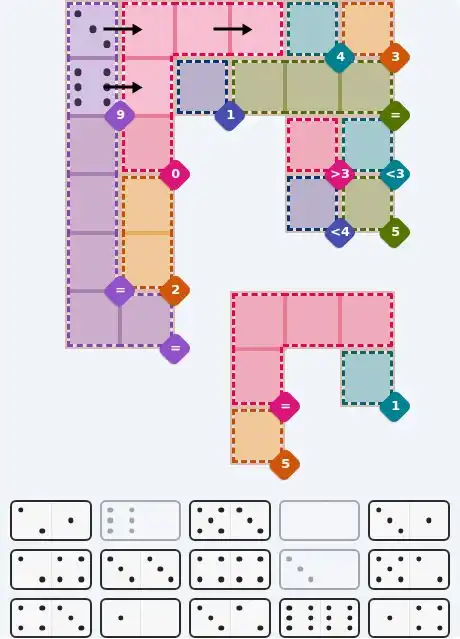
Pips hint for May 6, 2026 โ€“ hard level puzzle grid with critical first placements and strategy

This image shows the initial puzzle grid for the hard level, with a few critical first placements highlighted.

Final Answer: The Solved Grid for Hard Mode
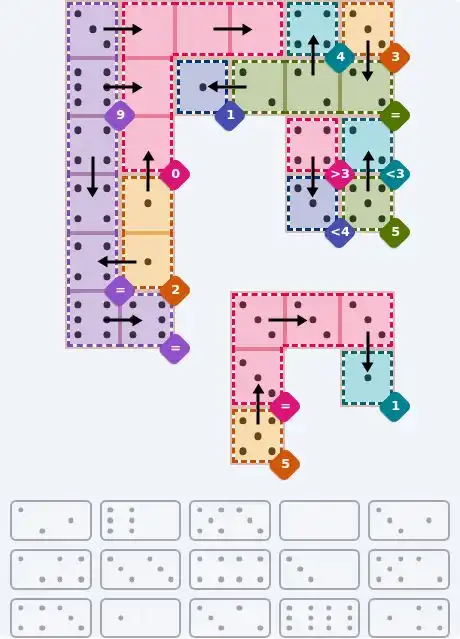
NYT Pips May 6, 2026 hard puzzle full solution grid showing final answer with hints

Compare this final grid with your own solution to see the correct placement of all dominoes.

๐Ÿ”ง Step-by-Step Answer Walkthrough For Easy Level

1
Step 1: The top-row sum-15 forces all 5s
The region spanning [0,1], [0,2], and [0,3] must sum to 15. Since individual pips max out at 6, the only way to reach 15 with three cells is 5+5+5. Therefore, every cell in this row segment must be a 5.
2
Step 2: Place the double-5 domino
The only domino carrying two 5s is [5,5] (index 2). It must occupy two of the three cells in the top-row region. Placing it on [0,2] and [0,3] fills those cells with 5s, leaving [0,1] still needing a 5.
3
Step 3: Complete the top and resolve the sum-3 pair
Cell [0,1] requires a 5, which can come from the [2,5] domino (index 4). Place it with 5 on [0,1] and the accompanying 2 on [1,1]. Now the sum-3 region [1,0]-[1,1] has [1,1]=2, so [1,0] must be 1. The [6,1] domino (index 3) provides that 1 on [1,0] and places its 6 on [2,0] โ€“ exactly satisfying the sum-6 single-cell region at [2,0].
4
Step 4: Finish with the sum-12 region and remaining constrains
The sum-12 region [2,2]-[2,3] needs 12. Use the [4,6] domino (index 1) with 6 on [2,3] and 4 on [1,3] โ€“ the 4 respects the less-5 constraint on [1,3]. Finally, the [6,5] domino (index 0) places its 6 on [2,2] and its 5 on [3,2], completing the solution.

๐Ÿ”ง Step-by-Step Answer Walkthrough For Medium Level

1
Step 1: Lock the equals-4 region
The equals region covering [1,3], [1,4], and [2,3] must all show the same pip value. The only domino with two 4s is [4,4] (index 0). Place it on [1,3]-[1,4] to satisfy two of the three cells with 4s.
2
Step 2: Zero in on the less-7 column
The less-7 region on [0,2], [1,2], [2,2] restricts each cell to values under 7. To keep numbers minimal, use the double-0 domino (index 2) on [0,2] and [1,2]. This forces 0 into the upper two cells, leaving [2,2] open for a larger number still below 7.
3
Step 3: Activate the equals-6 pair
The equals region at [1,1] and [2,1] needs both cells to be 6. The [3,6] domino (index 1) supplies a 6 to [2,1] and places its 3 on [2,2] โ€“ which remains <7, perfectly legal. Now [1,1] still lacks a 6.
4
Step 4: Feed the greater-3 cell
Cell [1,1] must be 6, so place the [6,4] domino (index 3) with 6 on [1,1] and 4 on [1,0]. The [1,0] cell has a greater-3 constraint, and 4 > 3 fits. The third 4 for the equals-4 region comes from the [0,4] domino (index 5) on [3,3]-[2,3]: 4 on [2,3] and 0 on [3,3] (which satisfies the less-6 on [3,3]).
5
Step 5: Wrap up with equals-2 and the final empty cell
The equals-2 region at [1,5], [2,4], [2,5] requires all 2s. Employ the double-2 domino (index 4) on [2,4]-[2,5]. Then the [6,2] domino (index 6) fits on [1,6]-[1,5]: 6 on the empty cell [1,6] and 2 on [1,5] to complete the equality chain.

๐Ÿ”ง Step-by-Step Answer Walkthrough For Hard Level

1
Step 1: Conquer the sum-0 region with the double-zero
The sum-0 region contains [0,1], [0,2], [0,3], [1,1], and [2,1]. All must be 0. The only domino with two zeros is [0,0] (index 3). Place it on [0,2]-[0,3] to zero out two cells immediately.
2
Step 2: Bridge zero to the sum-9 anchor
Cell [0,1] still needs a 0 and sits next to [0,0], which is in a sum-9 region with [1,0]. Place the [3,0] domino (index 8) on [0,0]-[0,1], assigning 3 to [0,0] and 0 to [0,1]. Now the sum-9 region has 3 from [0,0], so [1,0] must become 6. The [6,0] domino (index 1) fits perfectly on [1,0]-[1,1]: 6 at [1,0], 0 at [1,1].
3
Step 3: Claim the last sum-0 cell and seed the sum-2
The only remaining sum-0 cell is [2,1], which still needs a 0. The [1,0] domino (index 11) can cover [3,1]-[2,1], placing 1 at [3,1] and 0 at [2,1]. This also sets [3,1]=1, which together with the sum-2 region [3,1]-[4,1] demands [4,1] be 1.
4
Step 4: Build the equals-4 column
The equals region in column 0 ([2,0],[3,0],[4,0]) must all show 4. The [4,4] domino (index 7) occupies [2,0]-[3,0], giving two 4s. The [1,4] domino (index 14) then goes on [4,1]-[4,0] to supply 1 at [4,1] (completing sum-2 with [3,1]) and 4 at [4,0].
5
Step 5: Fashion the equals-2 row and adjacent sums
The equals-2 region [1,3],[1,4],[1,5] requires all cells to be 2. Start with [2,1] domino (index 0) on [1,3]-[1,2]: 2 at [1,3], 1 at [1,2] (satisfying the sum-1 on [1,2]). Next, [2,4] (index 5) on [1,4]-[0,4] gives 2 at [1,4] and 4 at [0,4] (for the sum-4 on [0,4]). Then [3,2] (index 12) on [0,5]-[1,5] places 3 at [0,5] (sum-3) and 2 at [1,5].
6
Step 6: Close out equals-6, equals-3, and the stragglers
The equals-6 region [5,0]-[5,1] takes the double-6 [6,6] (index 13). The equals-3 block ([5,3],[5,4],[5,5],[6,3]) is filled with [3,3] (index 6) on [5,3]-[5,4] and [3,1] (index 4) on [5,5]-[6,5] โ€“ giving 3 at [5,5] and 1 at [6,5] for its sum-1 constraint. The [5,3] domino (index 2) goes on [7,3]-[6,3] (5 at [7,3] for sum-5, 3 at [6,3]). Clean up: [5,2] (index 9) on [3,5]-[2,5] puts 5 at [3,5] (sum-5) and 2 at [2,5] (less-3); [4,3] (index 10) on [2,4]-[3,4] yields 4 at [2,4] (greater-3) and 3 at [3,4] (less-4).

๐Ÿ’ก Pro Tips for Similar Puzzles

Start with Constraints
Always begin with the most constrained regions - sum regions with small numbers or tight spaces.
Use Equal Regions
Use "equal" regions as anchors - they eliminate many possibilities quickly.
Work Systematically
Let the rules guide your placement rather than guessing randomly.
Double-Check
Verify each region's rules are satisfied before moving to the next.

๐ŸŽ“ Keep Learning & Improve