NYT Pips Hints & Answers for October 3, 2026

Oct 3, 2026

🚨 SPOILER WARNING

This page contains the final answer and the complete solution to today's NYT Pips puzzle. If you haven't attempted the puzzle yet and want to try solving it yourself first, now's your chance!

Click here to play today's official NYT Pips game first.

Want hints instead? Scroll down for progressive clues that won't spoil the fun.

SEE ALSO:

🎲 Today's Puzzle Overview

Easy (Ian Livengood) is the confidence-builder of the set: today's NYT Pips easy gives you ten cells and five tiles, and two of those cells read themselves — a single-cell 'less than 1' corner and a single-cell 'greater than 4' corner. There is also an equals pair that only one tile in the tray can satisfy. Expect the first two placements inside a minute and the whole grid in about two.

Medium (Rodolfo Kurchan) steps up to fourteen cells and seven tiles, and it has one genuine bottleneck: a three-cell equals column pinned to the left edge. Crack that and the less-than pair beside it and the two single-cell sum boxes fall into line; the all-different block in the bottom-left is the only region where the rule is negative, so leave it until last. Ten to fifteen minutes feels right.

Hard (also Kurchan) is the real test: fourteen tiles over a 28-cell board, with two separate equals columns on the frame, a three-cell sum run along the bottom and seven single-cell sums scattered around. Nothing here is a giveaway — the trick is to harvest both doubles into the equals columns early, then work the edges inward and treat the uncoloured free squares as wildcards. Budget half an hour.

💡 Progressive Hints

Try these hints one at a time. Each hint becomes more specific to help you solve it yourself!

💡 Find the tight corners first
Two single-cell constraints sit towards opposite corners: a 'less than' box at the bottom-left and a 'greater than' box at the top-left. Each one slashes the tray down to a candidate or two straight away, and the equals pair on the right edge can only ever be filled by a double. Start there before you touch anything else.
💡 The bottom-left cell decides half the tray
The little blue cell in the bottom-left corner obeys a 'less than 1' rule, so exactly one pip value qualifies — and only the 2/0 tile carries it, lying flat with its bigger half in the green sum 6 pair beside it. Over on the right edge the orange equals pair needs two matching pips, so it takes the tray's only double, standing vertically.
💡 Full easy layout
Lay the 1/5 tile flat along the very top edge: 5 on the left in the purple greater-4 corner, 1 on the right in the top cell of the pink equals pair. The 2/1 tile lies flat directly beneath it — 1 on the left in the bottom cell of the pink equals pair (both pink cells now read 1), 2 on the right in the top cell of the teal sum 8 pair. The 6/4 tile stands vertically at the bottom of that teal pair: 6 on top inside the teal sum 8, 4 below in the right cell of the green sum 6 pair. The 2/0 tile lies flat along the bottom-left: 0 on the left in the blue less-1 corner, 2 on the right in the left cell of the green sum 6 pair. The 6/6 double stands vertically in the orange equals pair on the right edge.
💡 Read the constraint types first
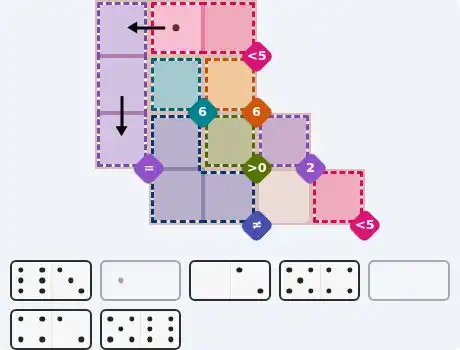
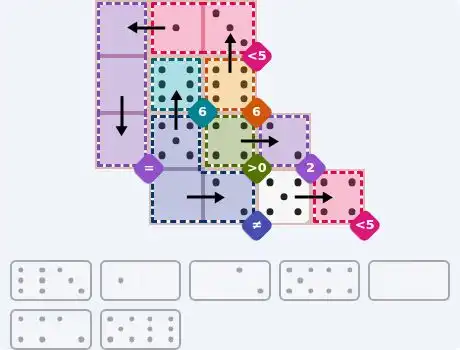
Three shapes are worth scanning before you place anything: an equals column pinned to the top-left edge, two single-cell sum boxes across the top, and one 'greater than' cell at the centre. One of those hands you the opening move. The all-different block in the bottom-left is a finisher, not a starter.
💡 The equals column picks its double
The purple equals column on the left edge is three cells tall and must be three identical pips. The tray holds exactly one double — the 0/0 tile — so it stands vertically inside the column, and the leftover cell has to be fed by the 1/0 tile lying flat along the top-left, which also drops a 1 into the pink less-5 pair beside it.
💡 Full medium layout
The 0/0 double stands vertically in the purple equals column, covering its middle and bottom cells. The 1/0 tile lies flat along the top-left: 0 in the top cell of the purple column, 1 in the left cell of the pink less-5 pair. The 6/3 tile stands vertically just right of centre-top — 6 below in the orange sum-6 cell, 3 above in the right cell of the pink less-5 pair, so that pair reads 1 and 3. The 5/6 tile stands vertically with 6 on top in the teal sum-6 cell and 5 below in the top-left cell of the blue unequal block. The 0/2 tile lies flat along the bottom of that block: 0 on the left, 2 on the right. The 4/2 tile lies flat with 4 on the left in the green greater-0 cell and 2 on the right in the purple sum-2 cell. The 5/4 tile finishes the bottom-right: 5 on the left in the uncoloured free square, 4 on the right in the pink less-5 single.
💡 Start from the constraint families
Two equals columns run down the frame (one on the right edge, one on the bottom-left), a cluster of single-cell sums sits along the bottom row, and two 'greater than' boxes are stacked in the top-left corner. Each equals column needs a double, and the tray holds exactly two.
💡 The top-left corner is the launch pad
Two single-cell sums sit side by side in the top-left — a sum 1 and a sum 0 — and the 1/0 tile lies flat across both, 1 on the left and 0 on the right. Directly below that corner, a 'greater than 3' box pairs with the purple 'greater than 4' cell above it, so the 4/5 tile stands vertically between them.
💡 Both equals columns take their doubles
The purple equals column on the right edge needs three identical pips: the 5/5 double stands vertically in its top two cells, and the third 5 arrives from the 5/2 tile below, whose 2 drops into the teal sum-2 corner at the bottom-right. The pink equals column down the bottom-left takes the 3/3 double in its top two cells. Across the top-right, the orange sum-8 pair splits as 3 and 5 from the 3/5 tile.
💡 The bottom band and the green run
The pink equals column still needs a third 3, and it has to come with a partner that fits the green sum-10 row to its right: the 3/4 tile lies flat, 3 in that column's bottom cell and 4 in the left cell of the green run. The 2/4 tile continues the run — 2 in the middle, 4 on the right. Along the bottom row itself, the 2/0 tile lies flat, 0 on the left in the purple sum-0 cell and 2 on the right in the pink sum-2 cell.
💡 Complete hard solution
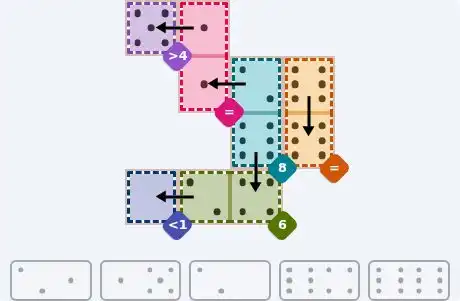
The 4/5 tile stands vertically in the top-left corner: 5 above in the purple greater-4 cell, 4 below in the blue greater-3 cell. The 1/0 tile lies flat to its right: 1 in the pink sum-1 cell, 0 in the teal sum-0 cell. The 4/1 tile lies flat next along, 1 on the left in the uncoloured square and 4 on the right in the uncoloured square beside it, and the 3/5 tile closes the top row in the orange sum-8 pair, 3 on the left and 5 on the right. The 5/5 double stands vertically in the purple equals column on the right edge, filling its top two cells, with the 5/2 tile directly below it — 5 in the column's bottom cell, 2 down in the teal sum-2 corner. Down the left side, the 3/3 double stands vertically in the pink equals column, filing its top two cells, and the 3/4 tile lies flat with 3 in that column's bottom cell and 4 in the left cell of the green sum-10 row; the 2/4 tile finishes the row, 2 in the middle and 4 on the right. The 1/3 tile stands vertically in the green sum-4 pair on the left, 3 above and 1 below, and the 2/1 tile stands vertically in the teal sum-3 pair at the centre, 1 above and 2 below. Finally the 0/5 tile stands vertically — 0 above in the uncoloured centre square, 5 below in the orange sum-5 cell; the 3/6 tile stands vertically at the right of the bottom rows, 6 above in the uncoloured square and 3 below in the blue sum-3 cell; and the 2/0 tile lies flat along the bottom, 0 on the left in the purple sum-0 cell and 2 on the right in the pink sum-2 cell.

🎨 Pips Solver

Oct 3, 2026

Click a domino to place it on the board. You can also click the board, and the correct domino will appear.
✅ Final Answer & Complete Solution For Hard Level

The key to solving today's hard puzzle was identifying the placement for the critical dominoes highlighted in the starting grid. Once those were in place, the rest of the puzzle could be solved logically. See the final grid below to compare your solution.

Starting Position & Key First Steps
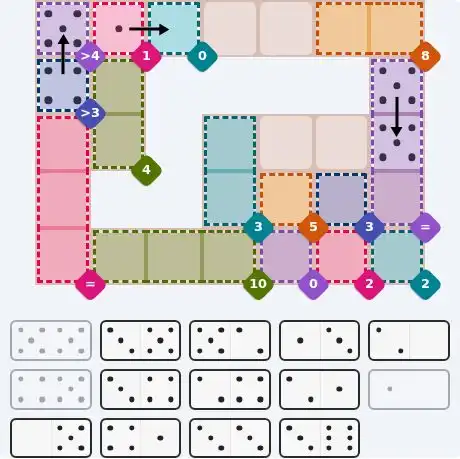
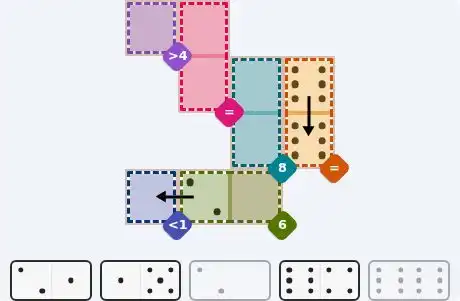
Pips hint for October 3, 2026 – hard level puzzle grid with critical first placements and strategy

This image shows the initial puzzle grid for the hard level, with a few critical first placements highlighted.

Final Answer: The Solved Grid for Hard Mode
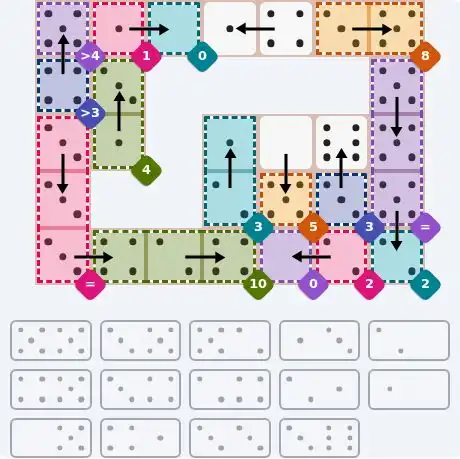
NYT Pips October 3, 2026 hard puzzle full solution grid showing final answer with hints

Compare this final grid with your own solution to see the correct placement of all dominoes.

🔧 Step-by-Step Answer Walkthrough For Easy Level

1
Step 1: Two single cells solve themselves
The blue less-than-1 cell in the bottom-left corner can only hold 0, and only the 2/0 tile carries one — so that tile lies flat across the bottom-left, 0 on the left in the blue cell and 2 on the right in the left cell of the green sum 6 pair. At the same time, the orange equals pair on the right edge demands two identical pips; the tray's sole double is 6/6, so it stands vertically there.
2
Step 2: Green completes itself
Green now shows 2 in its left cell and needs 4 in the right cell. The 6/4 tile is the only tile left carrying a 4, so it stands vertically between the bottom rows: 6 on top, landing in the lower cell of the teal sum 8 pair, and 4 below in the right cell of the green sum 6 pair.
3
Step 3: Teal takes its last cell
Teal sum 8 already holds the 6 from that tile, so its upper cell must be 2. The 2/1 tile lies flat across the middle-left, 1 on the left in the bottom cell of the pink equals pair and 2 on the right in the upper cell of the teal pair.
4
Step 4: One tile left
The 1/5 tile is all that remains. It lies flat along the top-left: 1 on the right in the top cell of the pink equals pair — giving pink its matching 1s — and 5 on the left in the purple greater-4 corner, which clears the 'greater than 4' rule.

🔧 Step-by-Step Answer Walkthrough For Medium Level

1
Step 1: The equals column sets the tone
Three cells in a stack, all identical, and only one double in the tray: the purple equals column down the left edge must therefore be all 0s. The 0/0 tile stands vertically through its middle and bottom cells, and the 1/0 tile lies flat along the top-left — 0 in the column's top cell, 1 in the left cell of the pink less-5 pair.
2
Step 2: The pink pair and the orange sum
Pink's left cell already reads 1, and its right cell must stay under 5. The orange sum-6 single cell sits directly beneath that right cell, so the 6/3 tile does double duty: 6 below in the orange box, 3 above in the pink right cell, which passes the 'less than 5' test.
3
Step 3: Teal's 6 feeds the blue block
The teal sum-6 cell sits directly above the blue unequal block, so its 6 must arrive with a partner heading downwards. The 5/6 tile stands vertically: 6 on top in the teal box, 5 below in the block's top-left cell.
4
Step 4: Blue, green and purple in one move
Two cells of the blue unequal block remain, side by side along its bottom row, and they must differ from each other and from the 5 already sitting in the block. The 0/2 tile lies flat there, 0 on the left and 2 on the right. The 4/2 tile then lies flat across the centre — 4 on the left in the green greater-0 cell, 2 on the right in the purple sum-2 cell.
5
Step 5: The bottom-right pair
One tile is left. The 5/4 tile lies flat along the bottom-right: 5 on the left in the uncoloured free square and 4 on the right in the pink less-5 single, which clears its rule comfortably.

🔧 Step-by-Step Answer Walkthrough For Hard Level

1
Step 1: The top-left trio solves itself
The pink sum-1 cell can only be 1, and the teal sum-0 cell beside it can only be 0. They are side by side, so the 1/0 tile lies flat across both: 1 on the left, 0 on the right. Two regions are done before anything else is placed.
2
Step 2: The stacked 'greater than' boxes
Directly below the top-left corner sits a 'greater than 3' cell, and the corner itself is 'greater than 4'. Both need high pips and they are vertically adjacent, so the 4/5 tile stands between them: 5 above in the purple greater-4 cell, 4 below in the blue greater-3 cell.
3
Step 3: Both equals columns claim their doubles
The purple equals column down the right edge must be three identical pips; the 5/5 double stands vertically in its top two cells, and the third 5 comes from the 5/2 tile just below, whose 2 drops into the teal sum-2 corner at the bottom-right. The pink equals column down the bottom-left likewise takes the 3/3 double in its top two cells.
4
Step 4: The bottom band and the green run
The pink equals column still needs a third 3, and it must arrive with a partner that fits the green sum-10 row to its right: the 3/4 tile lies flat, 3 in the column's bottom cell and 4 in the left cell of the green run. The 2/4 tile continues that run — 2 in the middle, 4 on the right — so the three cells total 10. Two cells along the bottom row are still open: the 2/0 tile lies flat there, 0 on the left in the purple sum-0 cell and 2 on the right in the pink sum-2 cell.
5
Step 5: The two sum pairs mid-board
The green sum-4 pair on the left needs 3 and 1, so the 1/3 tile stands vertically with 3 above and 1 below. The teal sum-3 pair at the centre needs 1 and 2, so the 2/1 tile stands vertically there, 1 above and 2 below.
6
Step 6: Free squares and the final tiles
The two uncoloured squares along the top are filled by the 4/1 tile, 1 on the left and 4 on the right. The 0/5 tile stands vertically, 0 in the uncoloured centre square and 5 below in the orange sum-5 cell. The 3/6 tile stands vertically at the right of the bottom rows, 6 in the uncoloured square and 3 below in the blue sum-3 cell. The 3/5 tile closes the top row in the orange sum-8 pair, 3 left and 5 right.

💡 Pro Tips for Similar Puzzles

Start with Constraints
Always begin with the most constrained regions - sum regions with small numbers or tight spaces.
Use Equal Regions
Use "equal" regions as anchors - they eliminate many possibilities quickly.
Work Systematically
Let the rules guide your placement rather than guessing randomly.
Double-Check
Verify each region's rules are satisfied before moving to the next.

🎓 Keep Learning & Improve