NYT Pips Hints & Answers for October 19, 2026

Oct 19, 2026

🚨 SPOILER WARNING

This page contains the final answer and the complete solution to today's NYT Pips puzzle. If you haven't attempted the puzzle yet and want to try solving it yourself first, now's your chance!

Click here to play today's official NYT Pips game first.

Want hints instead? Scroll down for progressive clues that won't spoil the fun.

SEE ALSO:

🎲 Today's Puzzle Overview

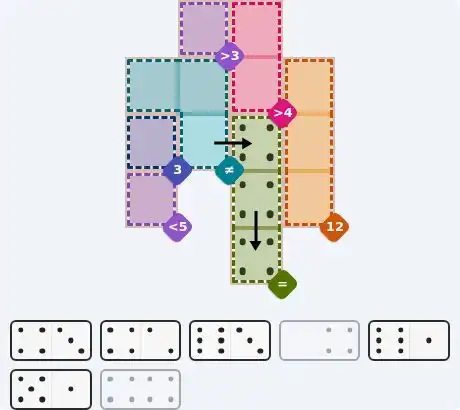
Easy (Ian Livengood) is a confidence-builder. This NYT Pips easy spends three of its six regions on single cells, so the whole puzzle really boils down to the purple equals run of three across the top-left. The tray holds exactly one double, and that single fact settles the run almost immediately; after that the orange sum pair and the teal sum pair hand you the rest in order. Expect a five-tile solve with clean deductions, no forks and no dead ends.

Medium (Rodolfo Kurchan) has one genuine bottleneck. The green equals column of three down the lower middle and the teal three-cell block where every pip must differ pull against each other, and the tall orange sum-12 column on the right only becomes usable once you commit to the equals value. Find that overlap and the remaining tiles drop in almost mechanically — a mid-weight solve with a satisfying snap.

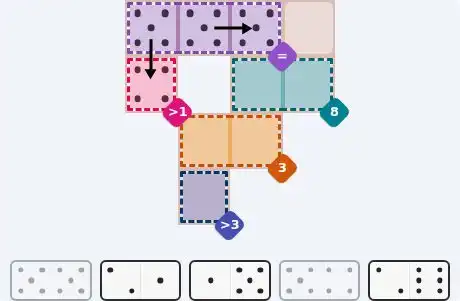
Hard (Rodolfo Kurchan) is a real step up. The sparse, gappy board leaves several cells with a single neighbour, which hides shortcuts as often as it reveals them, and the greater-than-11 block on the left forces your biggest pips early. The bottom half — a sum-10 pair and a less-than-6 pair — looks open but is close to forced, and the back third of the grid resolves in one clean cascade. Budget noticeably more time here.

💡 Progressive Hints

Try these hints one at a time. Each hint becomes more specific to help you solve it yourself!

💡 Start with the repeats
One region on this board insists that every one of its cells holds the same pip. Hunt that repeat first — it is the only place where a single decision unlocks a whole line of the grid.
💡 The purple run at the top-left
The equals region is the purple horizontal run of three across the top-left. A run of three needs a value that shows up in the tray more than once, and this tray holds only one double — pair that double with the matching half sitting on another tile and the whole run is settled.
💡 Full solution
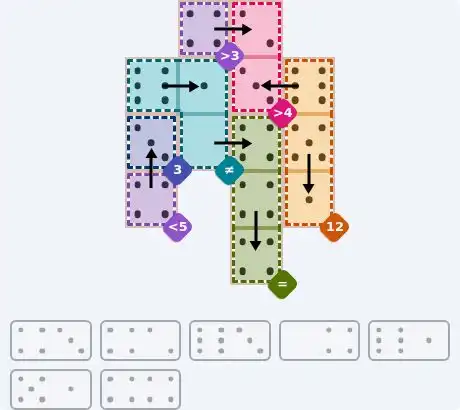
Purple is 5,5,5: the 5/5 lies flat across the middle and right cells of the top-left run, and the 5/4 stands vertically with 5 in the left purple cell and 4 dropping into the pink greater-than-1 cell below it. The orange sum-3 pair in the centre reads 1 + 2 — the 1/5 stands vertically with 1 in orange's left cell and 5 falling into the blue greater-than-3 cell, while the 2/6 stands vertically with 6 rising into the teal sum-8 pair and 2 in orange's right cell. Teal's other cell then needs a 2, so the 2/1 stands vertically: 2 down in teal, 1 up in the top-right uncoloured square.
💡 Spot the load-bearing constraint
This grid mixes single-cell sums, a greater-than check and one region where every cell must differ from the others. Start with the region that demands a repeated pip — repetition always collapses fastest.
💡 The green column near the bottom centre
The green equals region is a vertical column of three. Only one double is in the tray and it can cover just two of those cells, so the repeated pip must also come from a tile whose other half slides into the teal block sitting just above it.
💡 Full solution
Green is 4,4,4: the 4/4 stands vertically in the middle and lower green cells, and the 0/4 lies flat with 4 in the top green cell and 0 slipping into the teal block's bottom-right cell. The 4/3 stands vertically into the left-hand singles — 3 uppermost in the blue sum-3 cell, 4 below in the purple less-than-5 cell. The 4/2 lies flat with 4 in the purple greater-than-3 cell and 2 at the top of the pink greater-than-4 pair; pink's lower cell takes 3 from the 6/3, whose 6 lands at the top of the orange sum-12 column. The 5/1 stands vertically further down that column, 5 in the middle, 1 at the foot. Finally the 6/1 lies flat across the teal block's top row — 6 left, 1 right — beside the 0 already there, so the block holds three different pips.
💡 Read the region types first
You have an equals run, several single-cell sums, a block that must beat a big total and a pair that must stay under a small one. The repeated-pip run and the lonely top cell are where the chain begins.
💡 The top-left run and its neighbour
The purple equals run is the three cells across the top-left. Its right-hand cell has exactly one neighbour — the pink sum-2 cell at the top edge — so whichever tile bridges them must carry a 2 across. That single fact limits which value the whole run is allowed to repeat.
💡 The equals run can only be 4
All 3s would force the 3/5 to borrow across, dumping its 5 into the pink sum-2 cell; all 5s would use the same tile and dump a 3 there. Either way the pink cell is wrong, so the run repeats 4: the 4/4 lies flat across the left and middle purple cells, and the 2/4 lies flat with 4 in the right purple cell and 2 in the pink cell.
💡 The block and the two bottom pairs
Three pips capped at 6 must total more than 11 in the orange block, so a 3/3 stands vertically in its left column (3 above, 3 below) and the 2/6 lies flat to put 6 in the block's third cell, its 2 satisfying the green greater-than-1 cell. At the bottom, the pink sum-10 pair swallows both halves of the 5/5 — 5 above, 5 below — and the teal less-than-6 pair takes the 4/0, 4 above and 0 below for a total of 4.
💡 Full solution
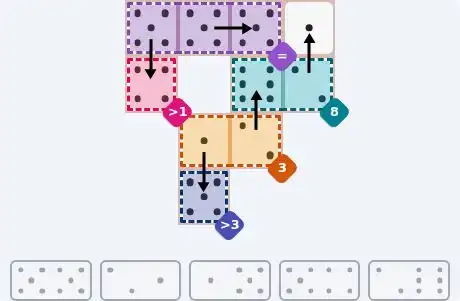
Purple equals run = 4,4,4: the 4/4 lies flat across its left and middle cells, the 2/4 lies flat with 4 in the right cell and 2 in the pink sum-2 cell. The 3/3 stands vertically in the orange greater-than-11 block (3 upper, 3 lower) and the 2/6 puts 6 in the block's third cell and 2 in the green greater-than-1 cell. The 5/5 stands vertically in the pink sum-10 pair, 5 uppermost and 5 below; the 4/0 stands vertically in the teal less-than-6 pair, 4 uppermost and 0 below. Top right: the 6/1 stands vertically, 1 uppermost in the teal sum-6 pair and 6 below in the blue sum-6 cell; the 3/5 lies flat with 5 completing that teal pair and 3 landing in the top-right uncoloured square; the 2/0 lies flat with 2 in the purple sum-2 cell and 0 in the right-hand uncoloured square; and the 4/6 lies flat with 6 in the orange sum-6 cell and 4 in the blue greater-than-2 cell at the bottom-right corner.

🎨 Pips Solver

Oct 19, 2026

Click a domino to place it on the board. You can also click the board, and the correct domino will appear.
✅ Final Answer & Complete Solution For Hard Level

The key to solving today's hard puzzle was identifying the placement for the critical dominoes highlighted in the starting grid. Once those were in place, the rest of the puzzle could be solved logically. See the final grid below to compare your solution.

Starting Position & Key First Steps
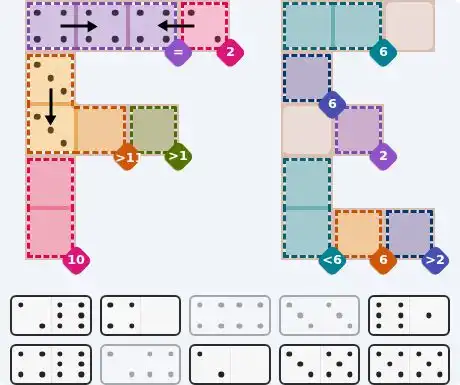
Pips hint for October 19, 2026 – hard level puzzle grid with critical first placements and strategy

This image shows the initial puzzle grid for the hard level, with a few critical first placements highlighted.

Final Answer: The Solved Grid for Hard Mode
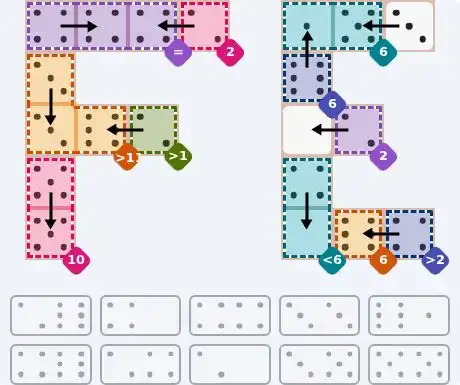
NYT Pips October 19, 2026 hard puzzle full solution grid showing final answer with hints

Compare this final grid with your own solution to see the correct placement of all dominoes.

🔧 Step-by-Step Answer Walkthrough For Easy Level

1
Step 1: One value, three cells
The purple region is an equals run of three across the top-left, so every cell in it must carry the same pip. No single tile can supply three matching halves, so the value has to live on two tiles — the 5/5 double plus the only other 5 in the tray, which rides on the 5/4. The run is three 5s.
2
Step 2: Lay the 5s into place
Set the 5/5 flat across the middle and right cells of the purple run. Then stand the 5/4 upright in the left column, its 5 landing in the purple run's left cell and its 4 dropping below into the pink single cell, where 4 clears the greater-than-1 bar comfortably.
3
Step 3: Orange needs 1 + 2
The orange pair in the centre of the board sums to 3, so its two pips can only be 1 and 2 — exactly the halves carried by the 1/5 and the 2/6. The 1/5 stands vertically on the left of that pair, 1 sitting in the orange cell and 5 below in the blue greater-than-3 cell. The 2/6 stands vertically on the right of the pair, 6 rising into the teal sum-8 pair and 2 resting in orange's right cell.
4
Step 4: Teal finishes itself
Teal already holds the 6 from the 2/6, so its second cell needs a 2. The last tile, the 2/1, stands vertically there: 2 in the teal cell and 1 rising into the top-right uncoloured square. That leaves the blue cell reading 5 and the pink cell reading 4, and every constraint on the board is satisfied.

🔧 Step-by-Step Answer Walkthrough For Medium Level

1
Step 1: The equals column names the value
The green vertical column of three near the bottom centre must repeat a single pip three times. The tray holds just one double, the 4/4, and a double covers only two cells — so the repeated value is 4, with the third 4 coming from the 0/4.
2
Step 2: Fill green, feed the teal block
Stand the 4/4 vertically in the middle and lower cells of the green column. The 0/4 then lies flat directly above it, its 4 taking the top green cell and its 0 slipping into the teal block's bottom-right cell.
3
Step 3: The two left-hand singles
The blue single cell must read 3, and the purple single directly below it must read less than 5 — so the pair is 3 and 4, and only the 4/3 fits. Stand it vertically: 3 uppermost in the blue sum-3 cell, 4 below in the purple less-than-5 cell.
4
Step 4: Pink pairs with the orange column
The 4/2 lies flat with its 4 in the purple greater-than-3 single and its 2 in the top cell of the pink greater-than-4 pair. Pink's two cells must total more than 4, so the lower cell takes the 3 from the 6/3 — and that same tile plants its 6 at the top of the orange sum-12 column on the right.
5
Step 5: Close the column and the block
The 5/1 stands vertically lower in the orange column: 5 in the middle cell, 1 at the foot, giving 6 + 5 + 1 = 12. Back at the teal block, the 6/1 lies flat across its top row — 6 on the left, 1 on the right — sitting beside the 0 already placed, so the block ends up holding three different pips.

🔧 Step-by-Step Answer Walkthrough For Hard Level

1
Step 1: The pink cell with one neighbour
The pink sum-2 cell sits alone at the top edge, and its only neighbour is the right-hand cell of the purple equals run. Whatever tile covers that join must therefore carry a 2 — in the tray, only the 2/6, the 2/4 and the 2/0 have a 2 to offer.
2
Step 2: The equals run can only repeat 4
The purple run of three needs one pip three times over. All 3s would have to borrow the 3 from the 3/5, dumping that tile's 5 into the pink sum-2 cell; all 5s would borrow the 5 from the same tile and dump a 3 there. Neither works, so the run repeats 4: the 4/4 lies flat across the left and middle cells, and the 2/4 lies flat with 4 in the right purple cell and 2 in the pink cell.
3
Step 3: The block has to beat 11
Three pips capped at 6 must total more than 11, so the orange block on the left needs a 6 plus heavy support. The 3/3 stands vertically in its left column — 3 uppermost, 3 below — and the 2/6 lies flat so its 6 fills the block's third cell while its 2 drops into the green greater-than-1 cell alongside. That gives 3 + 3 + 6 = 12.
4
Step 4: The bottom-left sum-10 pair
The pink vertical pair at the bottom-left must total 10. A 6 + 4 split would strand the bottom-right cells that need a 6 of their own, so the 5/5 double stands vertically there, 5 uppermost and 5 below. The teal vertical pair at the bottom-right must stay under 6, and the 4/0 slots in vertically — 4 uppermost, 0 below — for a tidy total of 4.
5
Step 5: The right-hand chain
The 6/1 stands vertically at the top right: 1 uppermost in the left cell of the teal sum-6 pair, 6 below in the blue sum-6 cell. The 3/5 then lies flat across the top right, its 5 completing the teal pair and its 3 landing in the top-right uncoloured square. Lower down, the 2/0 lies flat with 2 in the purple sum-2 cell and 0 in the right-hand uncoloured square, and the 4/6 lies flat with 6 in the orange sum-6 cell and 4 in the blue greater-than-2 cell at the bottom-right corner.

💡 Pro Tips for Similar Puzzles

Start with Constraints
Always begin with the most constrained regions - sum regions with small numbers or tight spaces.
Use Equal Regions
Use "equal" regions as anchors - they eliminate many possibilities quickly.
Work Systematically
Let the rules guide your placement rather than guessing randomly.
Double-Check
Verify each region's rules are satisfied before moving to the next.

🎓 Keep Learning & Improve