NYT Pips Hint, Answer & Solution for January 18, 2026

Jan 18, 2026

🚨 SPOILER WARNING

This page contains the final **answer** and the complete **solution** to today's NYT Pips puzzle. If you haven't attempted the puzzle yet and want to try solving it yourself first, now's your chance!

Click here to play today's official NYT Pips game first.

Want hints instead? Scroll down for progressive clues that won't spoil the fun.

🎲 Today's Puzzle Overview

On Sunday, January 18, 2026, NYT Pips delivers a clean but quietly demanding logic workout—perfect for a thoughtful weekend session.

As many solvers ease into a slower Sunday rhythm, today’s puzzles reward patience, careful counting, and disciplined domino management rather than rushed guessing.

Edited by Ian Livengood, the progression feels intentional and well-paced, moving from approachable logic to a dense, high-information finale.

It’s the kind of day where a well-timed Pips Hint can unlock momentum, and small arithmetic insights compound into a full solution.

The Easy grid (ID 529) uses a compact domino set with controlled sum and equals regions, serving as a sharp warm-up that helps establish rhythm and confidence.

The Medium puzzle (ID 553), constructed by Ian Livengood, raises the cognitive load through overlapping sum zones and equality constraints, forcing solvers to actively track remaining pieces and eliminate dead ends.

At the top end, the Hard puzzle (ID 574) by Rodolfo Kurchan pushes precision even further, combining numerous sum regions with tight totals that leave almost no margin for error.

Whether you’re reviewing a full solution, refining a pips hint today, or benchmarking speed and accuracy, January 18, 2026 stands out as a focused NYT Pips session—ideal for serious solvers who enjoy structured logic, clean design, and a satisfying Sunday challenge.

Written by Joe

Puzzle Analyst – Sophia

💡 Progressive Hints

Try these hints one at a time. Each hint becomes more specific to help you solve it yourself!

💡 Hint #1 - Quick inventory to spot singletons
Begin by scanning the domino list for unique pips. When a number like 3 or 0 appears together on only one domino, that piece is immediately critical for any region demanding that value.
💡 Hint #1 - Inventory scan & missing-value awareness
Start by listing all available dominoes and noting extremes. With only one 6-pip and one 5-pip in the entire set, any region requiring values above 4 will immediately depend on these pieces.
💡 Hint #2 - Use inequality to force a boundary
A strict >4 region paired with a small fixed sum leaves almost no flexibility. When only two dominoes qualify, the one that can also satisfy the neighboring sum becomes forced at their shared edge.
💡 Hint #3 - Deduce sums by exhausting pip counts
Track how many times a specific pip still appears. Limited 4s and 0s quickly determine which regions they must fill, collapsing multi-cell sums like 8 into an exact combination.
💡 Hint #4 - Resolve equals regions with the lowest pip
When an equal region remains and higher values are already committed, look to the smallest remaining pip. Equal regions often default to 0 once other numbers are eliminated.
💡 Hint #5 - Finish with forced leftovers
In the final step, only two dominoes remain. With all constraints satisfied elsewhere, simply place them where they fit without violating equality or sum rules to complete the grid.
💡 Hint #1 - Domino inventory & early scarcity check
Begin by auditing the full domino set and spotting what’s missing. The absence of 6-6 immediately fixes relative orientations, while limited counts of 6s and 5s signal that the largest sum region must absorb them early.
💡 Hint #2 - Force placements via shared boundaries
When two regions meet and only one domino can satisfy both sums, that boundary becomes decisive. Scarce 4-pip dominoes force a single placement that simultaneously resolves multiple adjacent regions.
💡 Hint #3 - Collapse medium sums by elimination
Once high-value pips are committed, mid-range sums like 10 and 6 narrow quickly. Check which pips remain available; when only one combination fits, the region effectively solves itself.
💡 Hint #4 - Exploit low-pip bottlenecks
Late-game constraints often hinge on small numbers. Limited 2s, 1s, and 0s will dictate exact compositions for small sum and equal regions, triggering a cascade of forced placements.
💡 Hint #5 - Resolve equal regions with leftovers logic
After most sums are satisfied, equal regions become straightforward. Identify which pip value can still repeat without conflict, then place remaining dominoes to exhaust that value cleanly.

🎨 Pips Solver

Jan 18, 2026

Click a domino to place it on the board. You can also click the board, and the correct domino will appear.
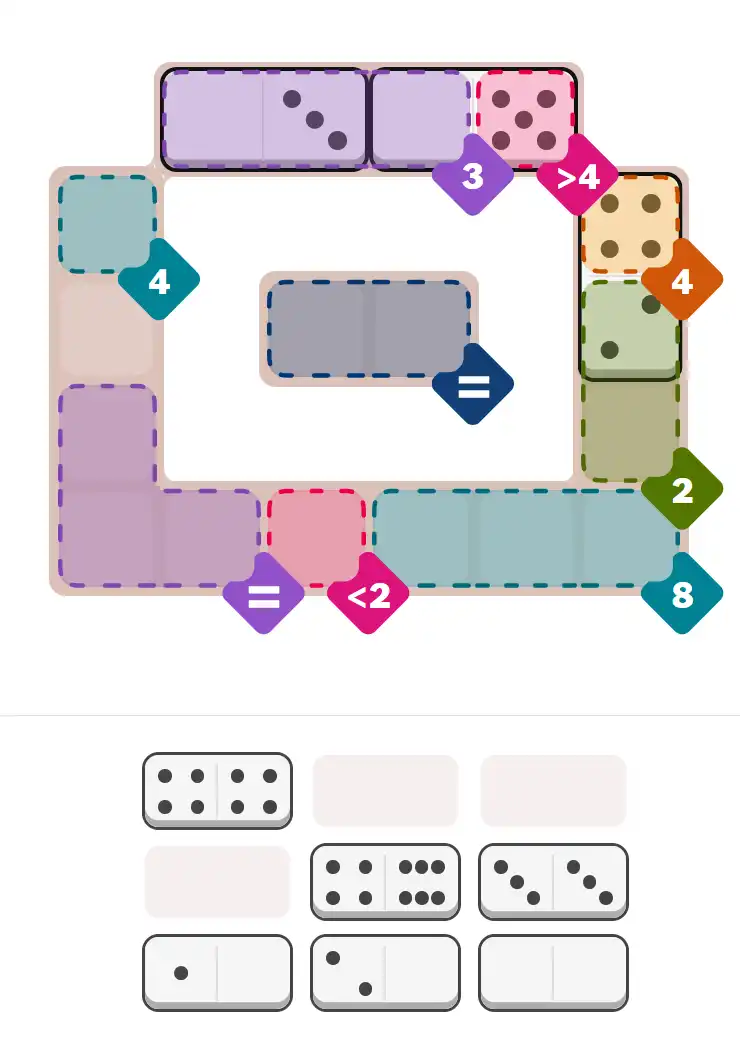
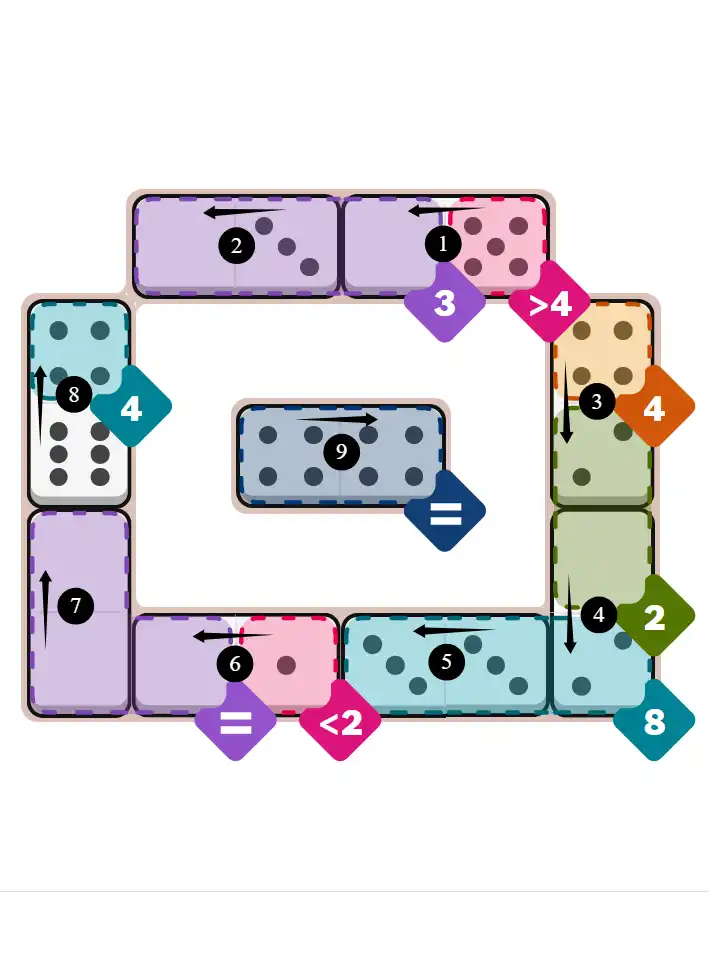
Final Answer & Complete Solution For Hard Level

The key to solving today's hard puzzle was identifying the placement for the critical dominoes highlighted in the starting grid. Once those were in place, the rest of the puzzle could be solved logically. See the final grid below to compare your solution.

Starting Position & Key First Steps
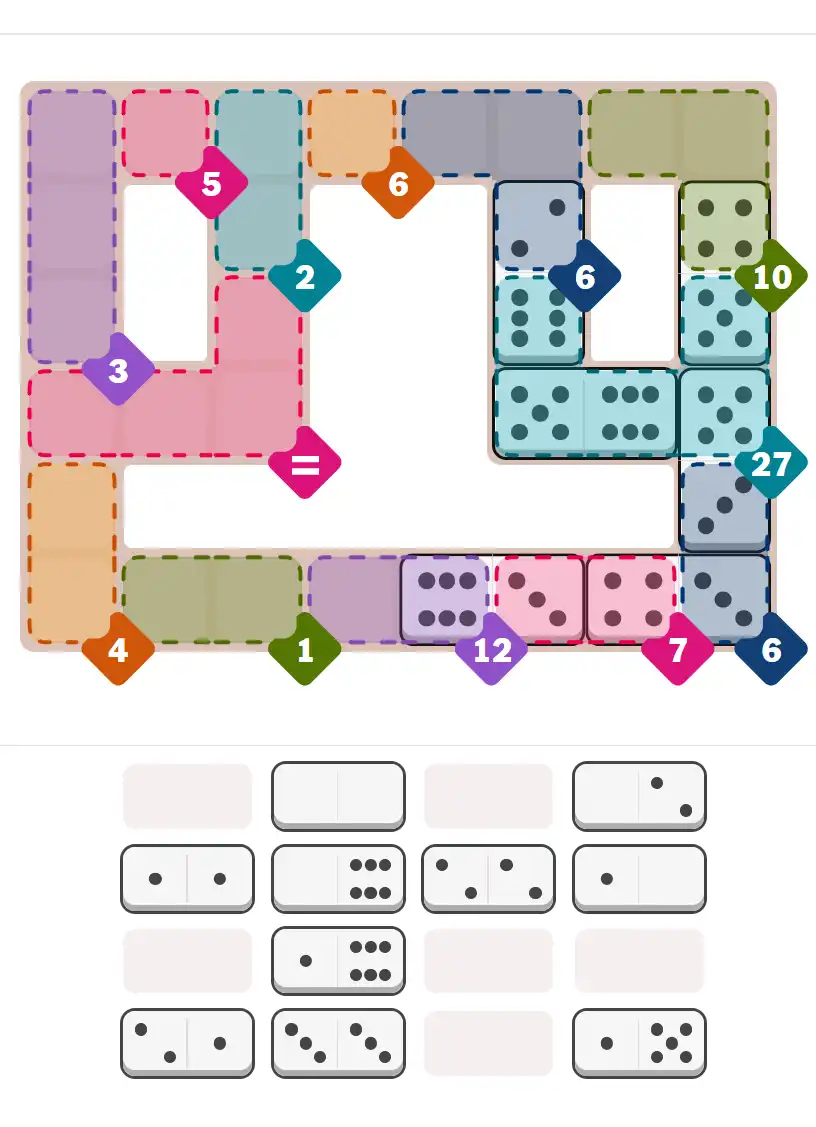
Pips hint for January 18, 2026 – hard level puzzle grid with critical first placements and strategy

This image shows the initial puzzle grid for the hard level, with a few critical first placements highlighted.

Final Answer: The Solved Grid for Hard Mode
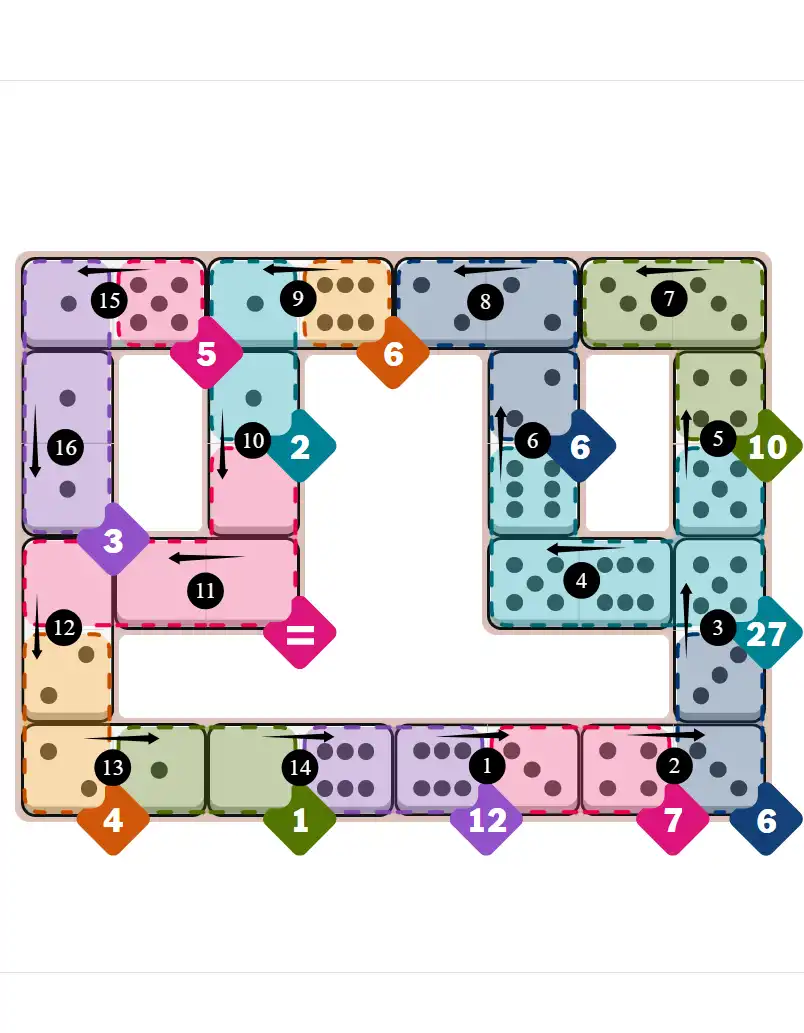
NYT Pips January 18, 2026 hard puzzle full solution grid showing final answer with hints

Compare this final grid with your own solution to see the correct placement of all dominoes.

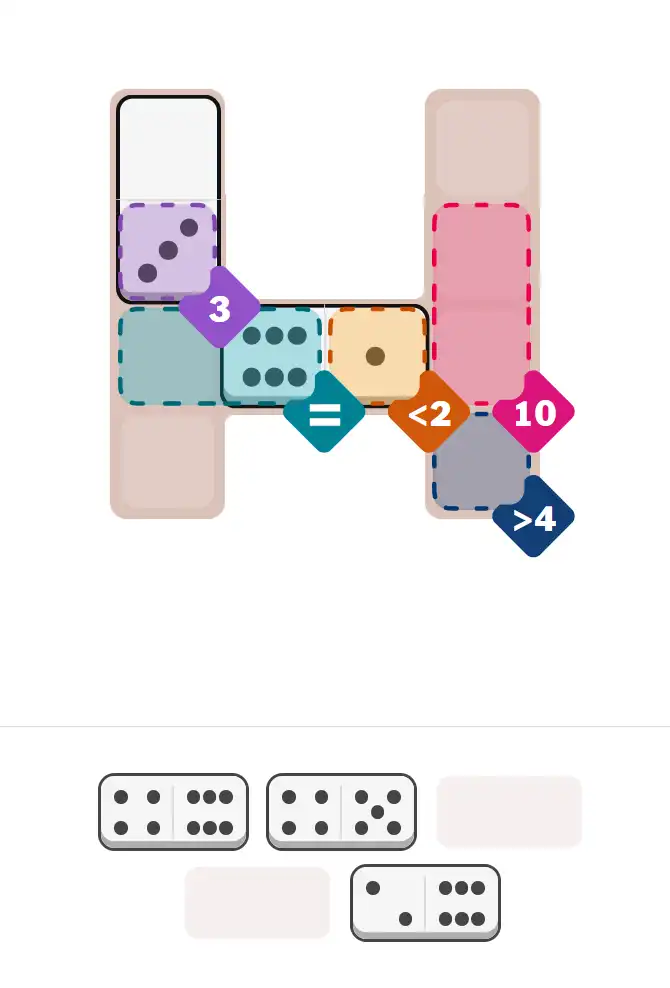
🔧 Step-by-Step Answer Walkthrough For Easy Level

1
Step 1
Dominoes Include: [6-4], [6-2], [6-1], [5-4], [3-0].
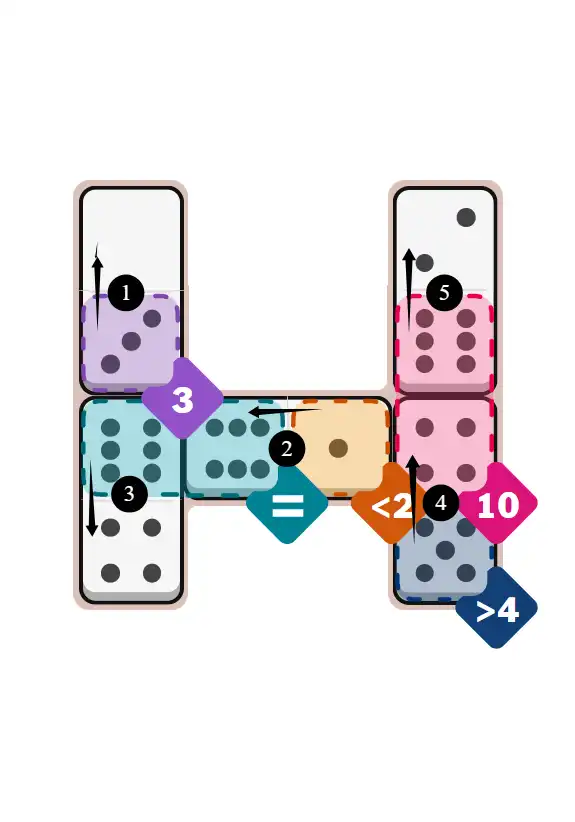
2
Step 2: Purple 3 --(Arrows ①)
Confirmed by neighboring region and step 1 and relative position. Only one domino with 3 pips and 0 pips (3-0). The answer is 3-0 (0 up into blank), placed vertically.
3
Step 3: Yellow <2 + Light Blue Equal --(Arrows ②③)
Confirmed by neighboring region and relative position and remaining dominoes (6-4, 6-2, 6-1, 5-4). The domino halves in Light Blue Equal region must be 6. The answer is 1-6 (1 into Yellow <2 region), placed horizontally; 6-4 (4 down into blank), placed vertically.
4
Step 4: Blue >3 + Red 10 --(Arrows ④⑤)
Confirmed by neighboring region and remaining dominoes (6-2, 5-4). The domino halves in Red 10 region must be 4+6. The answer is 5-4 (5 into Blue >3 region), placed vertically; 6-2 (2 up into blank), placed vertically.

🔧 Step-by-Step Answer Walkthrough For Medium Level

1
Step 1
Dominoes Include: [6-4], [5-0], [4-4], [4-2], [3-3], [3-0], [2-0], [1-0], [0-0].
2
Step 2: Red >4 + Purple 3 --(Arrows ①②)
Confirmed by neighboring region and step 1 and relative position. Only 2 domino with 6 pips or 5 pips (6-4, 5-0) more than 4. [5-0] must placed in the boundary between Red >4 region and Purple 3 region. Therefore, need one domino sum to 3 placed in Purple 3 region. The answer is 5-0 (5 into Red >4 region, 0 into Purple 3 region), placed horizontally; 3-0 (whole domino into Purple 3 region), placed horizontally.
3
Step 3: Yellow 4 + Green 2 + Light Blue 8 --(Arrows ③④⑤)
Confirmed by neighboring region and remaining dominoes. Only 3 dominoes left that contain 4 pips (6-4, 4-4, 4-2), the domino halves in Green 2 region must be 2+0. Only 3 dominoes left that contain 0 pips (2-0, 1-0, 0-0), the domino halves in Light Blue 8 region must be 2+3+3. The answer is 4-2 (4 into Yellow 4 region, 2 into Green 2 region), placed vertically; 0-2 (2 into Light Blue 8 region), placed vertically; 3-3 (whole domino), placed horizontally.
4
Step 4: Red <2 + Purple Equal --(Arrows ⑥⑦)
Confirmed by neighboring region and remaining dominoes (6-4, 4-4, 1-0, 0-0). The domino halves in Purple Equal region must be 0. The answer is 1-0 (1 into Red <2 region), placed horizontally; 0-0, placed vertically.
5
Step 5: Light Blue 4 + Blue Equal --(Arrows ⑧⑨)
Confirmed by neighboring region and remaining dominoes (6-4, 4-4). The answer is 6-4 (6 into blank, 4 into Light Blue 4 region), placed vertically; 4-4 (whole domino into Blue Equal region), placed horizontally.

🔧 Step-by-Step Answer Walkthrough For Hard Level

1
Step 1
Dominoes Include: [6-5], [6-3], [6-2], [6-1], [6-0], [5-4], [5-3], [5-1], [4-3], [3-3], [2-2], [2-1], [2-0], [1-1], [1-0], [0-0]. No domino with the number 6-6, Therefore, all the dominoes' relative positions are fixed. Only 5 domino halves that contain 6 pips, need two for Purple 12 region, need one for Yellow 6 region. Only 4 domino halves that contain 5 pips, need one for Red 5 region. Therefore, the domino halves in Light Blue 27 region must be 6+6+5+5+5, [6-5] must placed horizontally in Light Blue 27 region.
2
Step 2: Purple 12 + Red 7 + Bottom Blue 6 --(Arrows ①②③)
Confirmed by neighboring region and step 1 and relative position. Only 2 dominoes with 4 pips (5-4, 4-3), 5 pips must placed in Light Blue 27 region. Therefore, [4-3] must placed in the boundary between Red 7 region and Blue 6 region. The domino halves in Purple 12 region must be 6+6. The domino halves in Red 7 region must be 3+4. The domino halves in Bottom Blue 6 region must be 3+3. The answer is 6-3, placed horizontally; 4-3, placed horizontally; 3-5 (5 into Light Blue 27 region), placed vertically.
3
Step 3: Light Blue 27 + Green 10 + Top Blue 6 --(Arrows ④⑤⑥⑦⑧)
Confirmed by all left regions (need 5s or 6s) and remaining dominoes. The domino halves in Light Blue 27 region must be 6+6+5+5+5 (one 5s already come from Arrows ③). The domino halves in Green 10 region must be 4+3+3. The domino halves in Top Blue 6 region must be 2+2+2. The answer is 6-5, placed horizontally; 5-4 (4 into Green 10 region), placed vertically; 6-2 (2 into Top Blue 6 region), placed vertically; 3-3, placed horizontally; 2-2, placed horizontally.
4
Step 4: Yellow 6 + Light Blue 2 + Red Equal + Yellow 4 + Green 1 --(Arrows ⑨⑩⑪⑫⑬⑭)
Confirmed by all left regions and remaining dominoes (6-1, 6-0, 5-1, 2-1, 2-0, 1-1, 1-0, 0-0). Only 2 dominoes left that contain (2-1, 2-0), so the domino halves in Yellow 4 region must be 2+2. The domino halves in Light Blue 2 region must be 1+1. The domino halves in Red Equal region must be 0. The domino halves in Green 1 region must be 1+0. The answer is 6-1 (6 into Yellow 6 region), placed horizontally; 1-0, placed vertically; 0-0, placed horizontally; 0-2, placed vertically; 2-1 (1 into Green 1 region), placed horizontally; 0-6 (0 into Green 1 region, 6 into Purple 12 region), placed horizontally.
5
Step 5: Red 5 + Purple 3 --(Arrows ⑮⑯)
Confirmed by neighboring region and remaining dominoes (5-1, 1-1). The domino halves in Purple 3 region must be 1+1+1. The answer is 5-1 (5 into Red 5 region), placed horizontally; 1-1, placed vertically.

🎥 NYT Pips January 18, 2026 | Full Solve & Pips Hint Today (Easy 529 · Medium 553 · Hard 574)

If this helped, consider sharing your solve experience with the community, let us know which grid pushed you the hardest today.

💡 Pro Tips for Similar Puzzles

Start with Constraints
Always begin with the most constrained regions - sum regions with small numbers or tight spaces.
Use Equal Regions
Use "equal" regions as anchors - they eliminate many possibilities quickly.
Work Systematically
Let the rules guide your placement rather than guessing randomly.
Double-Check
Verify each region's rules are satisfied before moving to the next.

🎓 Keep Learning & Improve