NYT Pips Hint, Answer & Solution for January 11, 2026

Jan 11, 2026

🚨 SPOILER WARNING

This page contains the final **answer** and the complete **solution** to today's NYT Pips puzzle. If you haven't attempted the puzzle yet and want to try solving it yourself first, now's your chance!

Click here to play today's official NYT Pips game first.

Want hints instead? Scroll down for progressive clues that won't spoil the fun.

🎲 Today's Puzzle Overview

On Sunday, January 11, 2026, the NYT Pips puzzle rolls out a thoughtfully paced challenge that’s ideal for a focused weekend solve.

With more time to slow down and think, today’s grids reward careful observation, clean counting, and smart use of every Pips Hint.

Edited by Ian Livengood, this puzzle set emphasizes structure and logic over guesswork.

Each grid builds naturally on the last, encouraging solvers to refine technique and spot forced placements earlier in the process.

Easy (ID 528) keeps things tight and efficient.

Smaller regions and a compact domino pool make it perfect for warming up, spotting early constraints, and picking up quick pips hint today insights without overthinking.

Medium (ID 551) opens the board and raises the bar.

With more space and layered equals and sum conditions, success here comes from tracking domino distribution and committing only when the logic is airtight.

Hard (ID 573), designed by Rodolfo Kurchan, is where everything comes together.

This grid is a full logic workout—dense, deliberate, and unforgiving—where every placement shapes the solution path and every mistake is costly.

Whether you’re measuring improvement, breaking down strategies for a solution video, or searching for reliable NYT Pips hints, January 11, 2026 stands out as a satisfying benchmark for true mastery.

Written by Joe

Puzzle Analyst – Nikki

💡 Progressive Hints

Try these hints one at a time. Each hint becomes more specific to help you solve it yourself!

💡 Hint #1 - A piece of cake
Enjoy it
💡 Hint #1 - Track scarce pips early
Start by counting rare pip values across the full domino set. When only a limited number of dominoes can satisfy specific regions (like pip 2 here), those regions become tightly constrained and guide your opening logic.
💡 Hint #2 - Lock in extreme constraints first
Regions with very small or very large sum limits (such as less-than constraints) often resolve immediately. Placing these early removes uncertainty and simplifies nearby regions.
💡 Hint #3 - Chain multi-region deductions
When several regions interact at once, solve them as a group. Use sum targets, equals regions, and pip distribution together to place multiple dominoes in a single logical sequence.
💡 Hint #4 - Finish with forced equals
Once most values are placed, equals regions usually collapse to a single option. Use remaining dominoes to confirm these final placements and close the grid cleanly.
💡 Hint #1 - Spot the global pattern
Before placing anything, scan the full domino set and notice the clean descending pip structure. Recognizing an ordered sequence (from 4s down to 0s) helps anticipate forced boundaries and reduces guesswork later.
💡 Hint #2 - Anchor doubles on equal boundaries
When two regions demand the same target value, a matching double often becomes unavoidable. Use these equal-value borders to lock in high-impact dominoes early and stabilize the grid.
💡 Hint #3 - Resolve shared-sum junctions
Adjacent regions with identical sum requirements strongly suggest a double at their intersection. Placing it early simplifies surrounding regions and limits future branching.
💡 Hint #4 - Collapse low-value equals
Small-number equal regions tend to resolve cleanly once higher values are placed. Commit these low doubles as soon as they become isolated to prevent accidental conflicts.
💡 Hint #5 - Use pip scarcity to force placement
When only one remaining domino contains the exact pip combination needed by two neighboring regions, placement is forced. Track rare pip counts to spot these moments quickly.
💡 Hint #6 - Clear clusters with elimination
After key anchors are placed, evaluate clusters of adjacent regions together. Matching remaining dominoes by elimination often allows multiple placements in one logical sweep.
💡 Hint #7 - Pair extremes to finish regions
High-value and zero-value pips frequently resolve complementary regions. Look for opportunities where extremes naturally satisfy multiple constraints at once.
💡 Hint #8 - Endgame by remaining set logic
In the final phase, rely entirely on the leftover domino list. When only a few combinations remain, align each with its唯一合法位置 to complete the grid cleanly.

🎨 Pips Solver

Jan 11, 2026

Click a domino to place it on the board. You can also click the board, and the correct domino will appear.
Final Answer & Complete Solution For Hard Level

The key to solving today's hard puzzle was identifying the placement for the critical dominoes highlighted in the starting grid. Once those were in place, the rest of the puzzle could be solved logically. See the final grid below to compare your solution.

Starting Position & Key First Steps
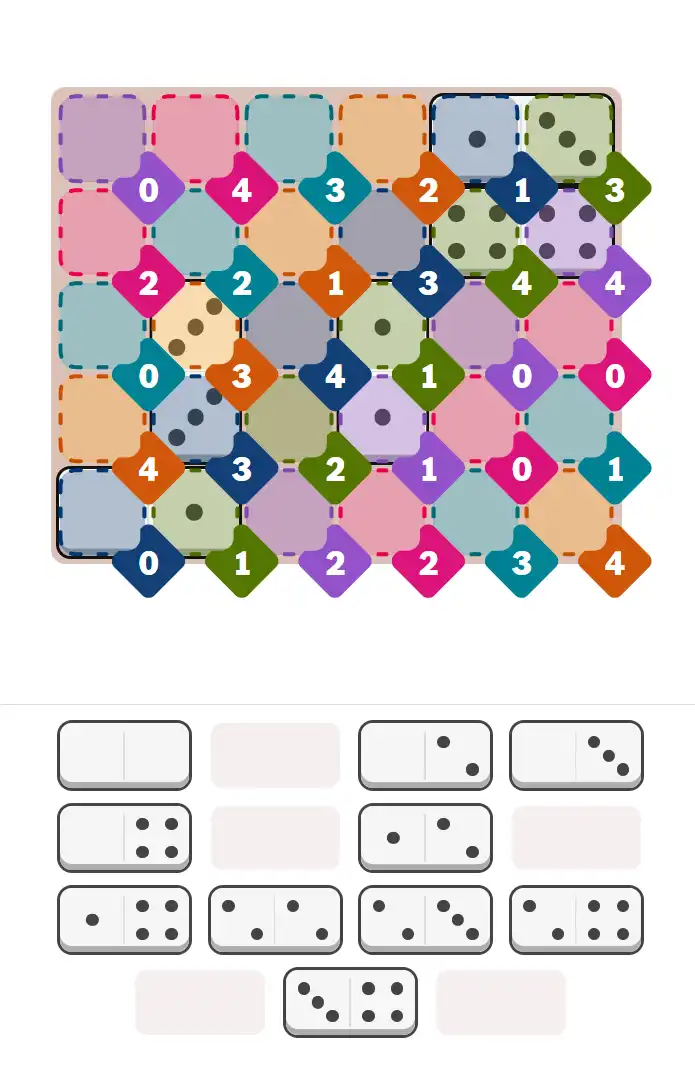
Pips hint for January 11, 2026 – hard level puzzle grid with critical first placements and strategy

This image shows the initial puzzle grid for the hard level, with a few critical first placements highlighted.

Final Answer: The Solved Grid for Hard Mode
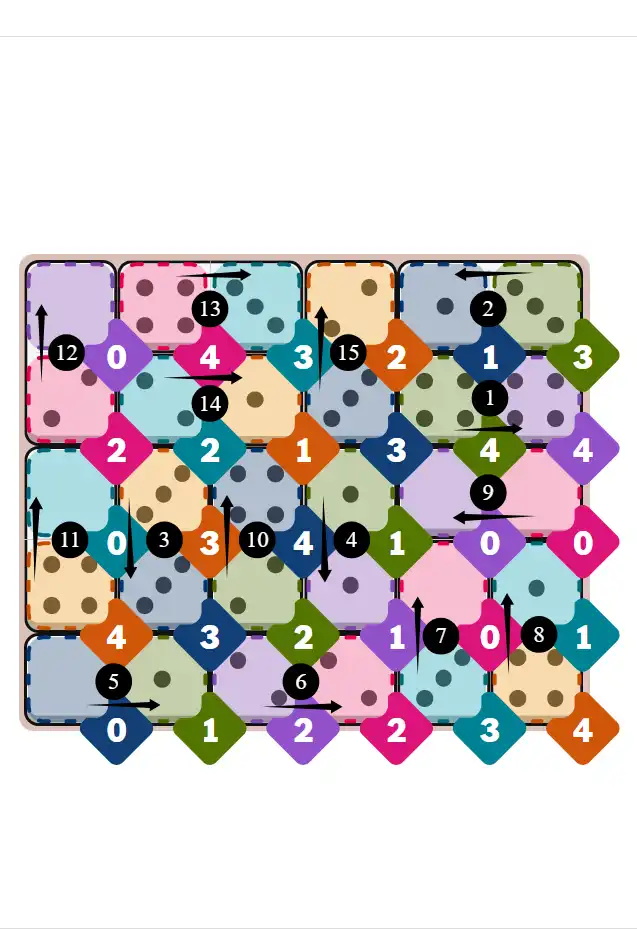
NYT Pips January 11, 2026 hard puzzle full solution grid showing final answer with hints

Compare this final grid with your own solution to see the correct placement of all dominoes.

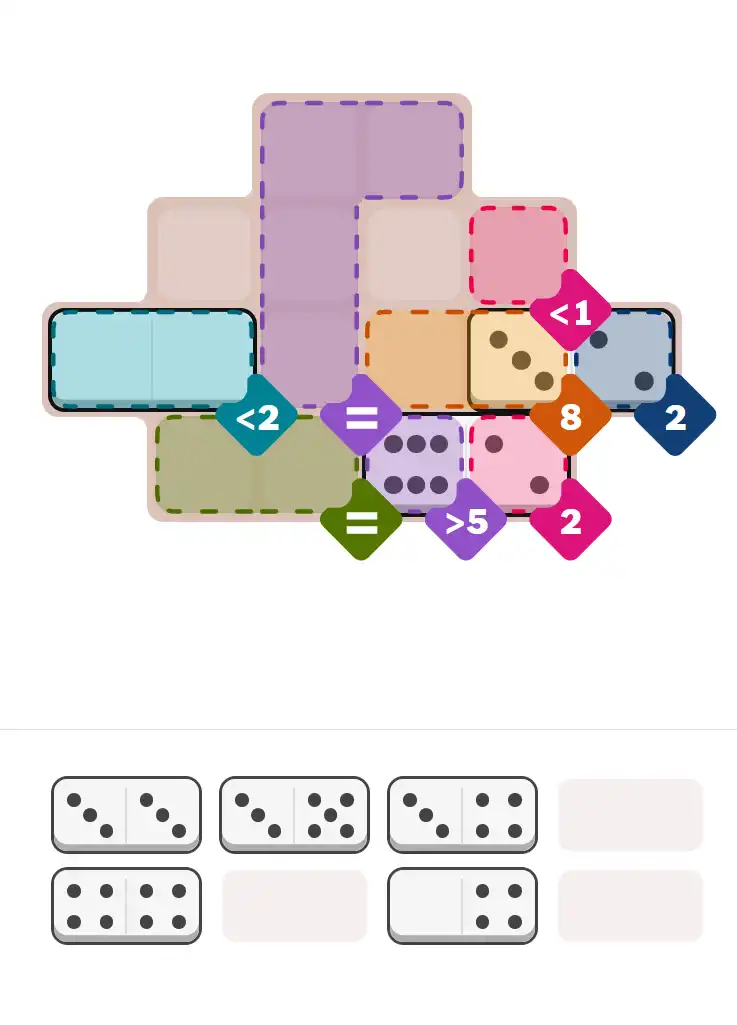
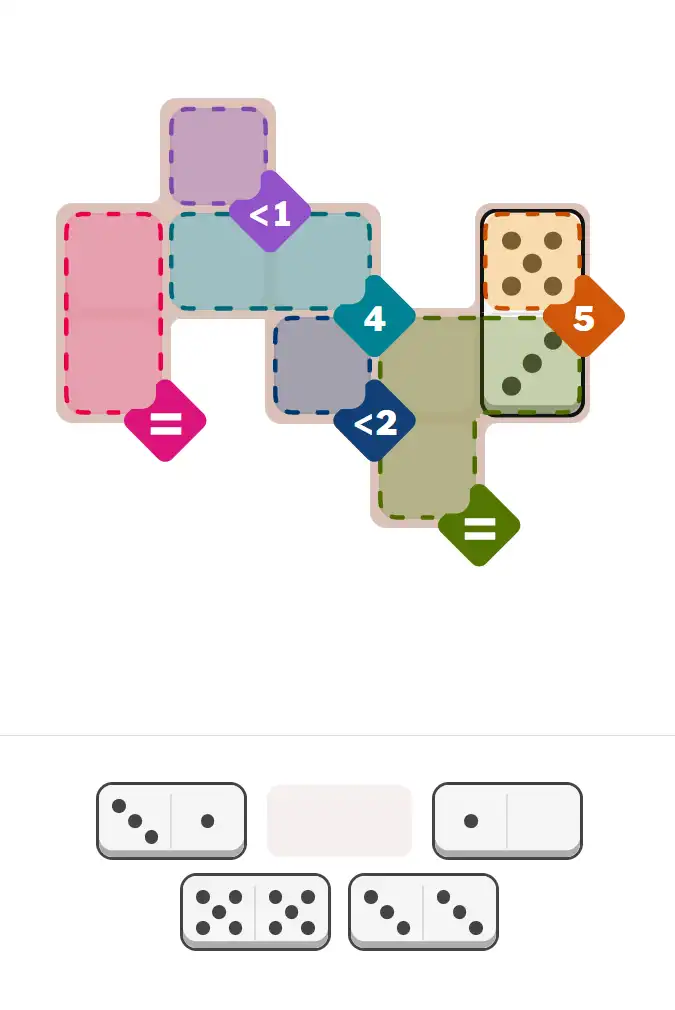
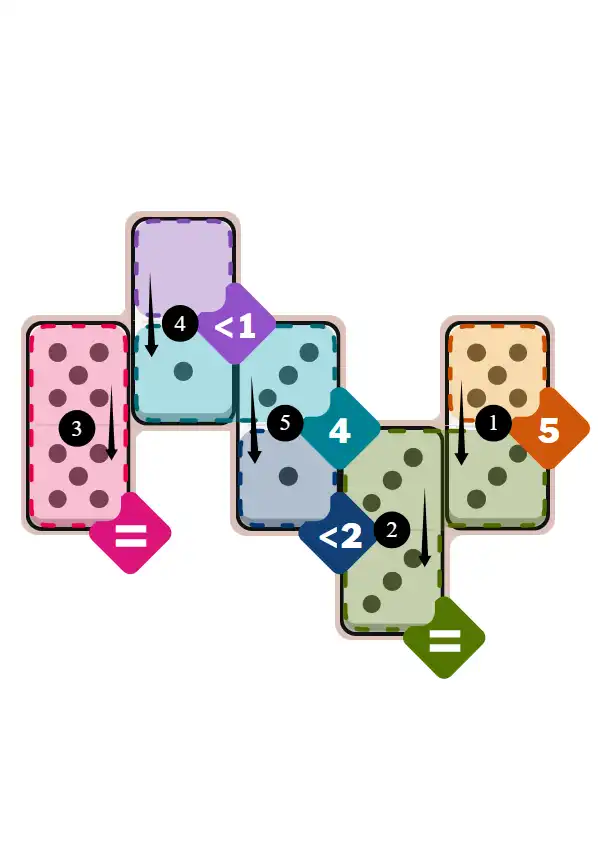
🔧 Step-by-Step Answer Walkthrough For Easy Level

1
Step 1
Dominoes Include: [5-5], [5-3], [3-3], [3-1], [1-0].
2
Step 2: Yellow 5 + Green Equal --(Arrows ①②)
Confirmed by neighboring region and step 1 and relative position. The domino halves in Green Equal region must be 3. The answer is 5-3 (5 into Yellow 5 region), placed vertically; 3-3, placed vertically.
3
Step 3: Red Equal + Purple <1 + Light Blue 4 + Blue <2 --(Arrows ③④⑤)
Confirmed by neighboring region and remaining dominoes (5-5, 3-1, 1-0). The domino halves in Light Blue 4 region must be 1+3. The answer is 5-5 (whole domino into Red Equal), placed vertically; 0-1 (0 into Purple <1 region), placed vertically; 3-1 (1 into Blue <2 region), placed vertically.

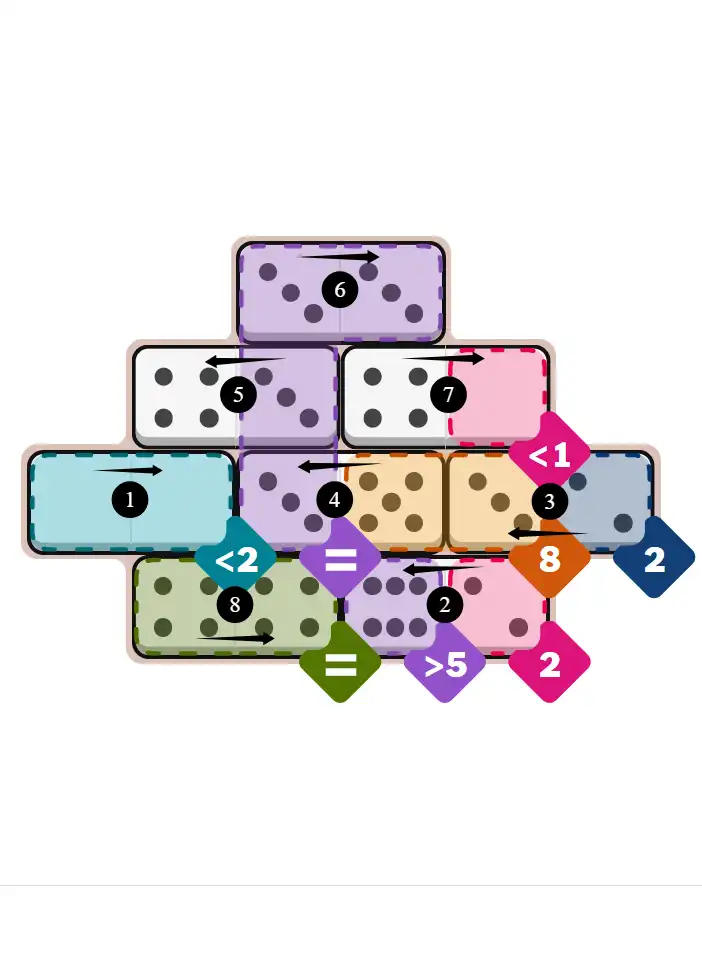
🔧 Step-by-Step Answer Walkthrough For Medium Level

1
Step 1
Dominoes Include: [6-2], [5-3], [4-4], [4-3], [4-0], [3-3], [3-2], [0-0]. Only 2 dominoes with 2 pips (6-2, 3-2) for Red 2 region and Blue 2 region.
2
Step 2: Light Blue <2 --(Arrows ①)
Confirmed by neighboring region and step 1 and relative position. Need one domino sum to be less than 2 placed in this region. The answer is 0-0, placed horizontally.
3
Step 3: Red 2 + Purple >5 + Blue 2 + Yellow 8 + Purple Equal --(Arrows ②③④⑤⑥)
Confirmed by neighboring region and relative position and remaining dominoes. The domino halves in Yellow 8 region must be 3+5. The domino halves in Purple Equal region must be 3. The answer is 2-6 (2 into Red 2 region, 6 into Purple >5 region), placed horizontally; 2-3 (2 into Blue 2 region, 3 into Yellow 8 region), placed horizontally; 5-3, placed horizontally; 3-4 (4 left into blank), placed horizontally; 3-3, placed horizontally.
4
Step 4: Red <1 + Green Equal --(Arrows ⑦⑧)
Confirmed by neighboring region and remaining dominoes (4-4, 4-0). The answer is 4-0 (4 into blank, 0 into Red <1 region), placed horizontally; 4-4 (whole domino into Green Equal region), placed horizontally.

🔧 Step-by-Step Answer Walkthrough For Hard Level

1
Step 1
Dominoes Include: [4-4], [4-3], [4-2], [4-1], [4-0], [3-3], [3-2], [3-1], [3-0], [2-2], [2-1], [2-0], [1-1], [1-0], [0-0]. All the dominoes' pips decrease in a regular pattern.
2
Step 2: Green 4 + Purple 4 + Green 3 + Blue 1 --(Arrows ①②)
Confirmed by neighboring region and step 1 and relative position. [4-4] must placed in the boundary between Green 4 region and Purple 4 region. The answer is 4-4, placed horizontally; 3-1, placed horizontally.
3
Step 3: Yellow 3 + Blue 3 --(Arrows ③)
Confirmed by neighboring region and relative position and remaining dominoes. [3-3] must placed in the boundary between Yellow 3 region and Blue 3 region. The answer is 3-3, placed vertically.
4
Step 4: Green 1 + Purple 1 --(Arrows ④)
Confirmed by neighboring region and relative position and remaining dominoes. [1-1] must placed in the boundary between Green 1 region and Purple 1 region. The answer is 1-1, placed vertically.
5
Step 5: Blue 0 + Green 1 --(Arrows ⑤)
Confirmed by neighboring region and relative position and remaining dominoes. Need one dominoe palced in the boundary between Blue 0 region and Green 1 region. Only one domino left that contain 0 pips and 1 pips (1-0). The answer is 0-1, placed horizontally.
6
Step 6: (Purple 2 + Red 2) + (Light Blue 3 + Red 0) + (Yellow 4 + Light Blue 1) + (Red 0 + Purple 0) --(Arrows ⑥⑦⑧⑨)
Confirmed by neighboring region and relative position and remaining dominoes. The answer is 2-2, placed horizontally; 3-0, placed vertically; 4-1, placed vertically; 0-0, placed horizontally.
7
Step 7: (Green 2 + Blue 4) + (Yellow 4 + Light Blue 0) --(Arrows ⑩⑪)
Confirmed by neighboring region and relative position and remaining dominoes. The answer is 2-4, placed vertically; 4-0, placed vertically.
8
Step 8: (Red 2 + Purple 0) + (Red 4 + Light Blue 3) + (Light Blue 2 + Yellow 1) + (Blue 3 + Yellow 2) --(Arrows ⑫⑬⑭⑮)
Confirmed by neighboring region and relative position and remaining dominoes (4-3, 3-2, 2-1, 2-0). The answer is 2-0, placed vertically; 4-3, placed horizontally; 2-1, placed horizontally; 3-2, placed vertically.

🎥 NYT Pips January 11, 2026 Solution & Strategy Breakdown | Easy to Hard Logic Explained

NYT Pips January 11, 2026 Solution & Strategy Breakdown | Easy to Hard Logic Explained

💡 Pro Tips for Similar Puzzles

Start with Constraints
Always begin with the most constrained regions - sum regions with small numbers or tight spaces.
Use Equal Regions
Use "equal" regions as anchors - they eliminate many possibilities quickly.
Work Systematically
Let the rules guide your placement rather than guessing randomly.
Double-Check
Verify each region's rules are satisfied before moving to the next.

🎓 Keep Learning & Improve