NYT Pips Hints & Answers for August 2, 2026

Aug 2, 2026

๐Ÿšจ SPOILER WARNING

This page contains the final **answer** and the complete **solution** to today's NYT Pips puzzle. If you haven't attempted the puzzle yet and want to try solving it yourself first, now's your chance!

Click here to play today's official NYT Pips game first.

Want hints instead? Scroll down for progressive clues that won't spoil the fun.

SEE ALSO:

๐ŸŽฒ Today's Puzzle Overview

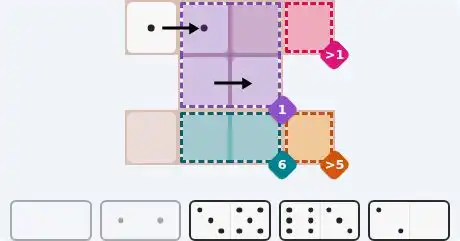
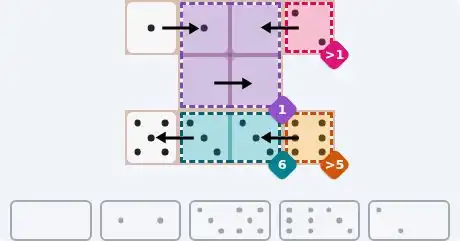
Today's NYT Pips easy by Ian Livengood is a masterclass in minimalism. A four-cell sum-1 region dominates the upper-center, forcing a delicate waltz between a pair of ones and a trio of zeros. Livengood's signature lies in how he uses the double-zero and double-one dominoes not as crutches but as precision toolsโ€”each domino straddles a boundary just enough to satisfy the grid's tight arithmetic without ever feeling underclued.

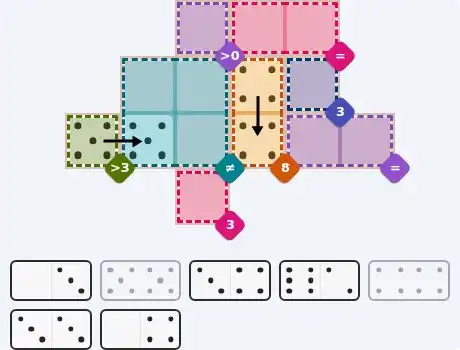
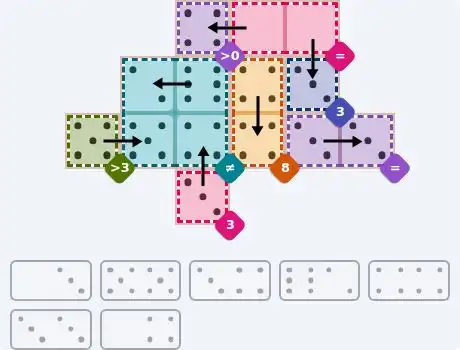
In the medium puzzle, Rodolfo Kurchan deploys a rare 'unequal' region, demanding four distinct values in a tight central cluster. This constraint immediately weaponizes the available doubles: a 5-5 must leak out to a greater-than cell, a 6-2 pairs with a 3-4 to supply the full set, and a sum-8 vertical column locks in the only viable 4-4. Kurchan's structural elegance emerges as the equals regions at the top and right echo each other, turning a seemingly scattered board into a poised, interdependent cage.

Kurchan's hard NYT Pips grid escalates with a sprawling equals architecture. A tetromino-shaped 2-cluster spanning four cells in the middle-left acts as the puzzle's anchor, fed by a cascade of dominoes each bearing a 2. Meanwhile, a sum-0 cell at (1,3) triggers a chain that meshes with a less-3 region above, and a bottom-row equals strip of four 1s ties the frame together. The design intention is clear: create a web of equalities that forces solvers to carefully allocate every single pip of a given number, turning the board into a satisfyingly rigid lattice.

๐Ÿ’ก Progressive Hints

Try these hints one at a time. Each hint becomes more specific to help you solve it yourself!

๐Ÿ’ก Hint 1: The Low-Sum Signal
Scan for a region that demands an impossibly low totalโ€”just 1 across four cells. This extreme sum-1 constraint will radically restrict which numbers can land there.
๐Ÿ’ก Hint 2: The Sum-1 Quadrant
That sum-1 region sits at rows 0โ€“1, columns 1โ€“2. A domino with two 1s can't completely sit inside without breaking the sum, so it must straddle the boundary with the empty cell at (0,0). The remaining three cells in the sum-1 region must all be zeros.
๐Ÿ’ก Hint 3: Full Solution
Place [1,1] horizontally at (0,0)โ€“(0,1) giving 1s. Place [0,0] horizontally at (1,1)โ€“(1,2) giving 0s. Place [2,0] horizontally at (0,3)โ€“(0,2) with 2 in greater-1 and 0 in sum-1. On the bottom, put [3,5] horizontally at (2,1)โ€“(2,0) with 3 at left (sum-6) and 5 at empty; put [6,3] horizontally at (2,3)โ€“(2,2) with 6 in greater-5 and 3 in sum-6.
๐Ÿ’ก Hint 1: The Unequal Signal
Watch for an 'unequal' regionโ€”a rare constraint where every cell must hold a different number. Use the available double dominoes strategically; they can't sit fully inside without causing a duplicate.
๐Ÿ’ก Hint 2: Center and Top Anchors
The unequal region occupies the center (rows 1โ€“2, cols 1โ€“2). The double-5 can't squeeze in, so it must leak into the greater-3 cell at (2,0). Meanwhile, the top equals region at (0,3)โ€“(0,4) needs two zeros, but no double-zero existsโ€”two different dominoes must meet there, one covering (0,3) with a zero from [0,4] and the other covering (0,4) with a zero from [0,3].
๐Ÿ’ก Hint 3: Full Solution
Place [4,4] vertically at (1,3)โ€“(2,3) for sum-8. Place [0,4] horizontally at (0,3)โ€“(0,2) with 0 left and 4 in greater-0. Place [0,3] vertically at (0,4)โ€“(1,4) with 0 top and 3 in sum-3. Place [5,5] horizontally at (2,0)โ€“(2,1) with 5s. Place [6,2] vertically at (1,2)โ€“(1,1) with 6 above, 2 below. Place [3,4] vertically at (3,2)โ€“(2,2) with 3 in sum-3 and 4 in unequal. Place [3,3] horizontally at (2,4)โ€“(2,5) for the equal region.
๐Ÿ’ก Hint 1: The Equals Web
Look for multiple equals regions demanding identical numbers. A four-cell cluster in the mid-left and a long horizontal strip at the bottom will heavily restrict pip distribution.
๐Ÿ’ก Hint 2: Central 2-Cluster & Sum-0
The equals cluster spans [2,2], [2,3], [3,2], [4,2]. All must hold the same number; 2 is your best candidate because it appears on multiple dominoes. The sum-0 cell at (1,3) forces a zero there, which pairs naturally with the less-3 region above it.
๐Ÿ’ก Hint 3: Bottom Equals & More 2s
The bottom-row equals region (5,1)โ€“(5,4) needs four identical values. A domino with a 1 and a 4 must straddle the less-5 cell at (5,0), forcing the repeated digit to be 1. The central 2-cluster starts resolving with [2,5] vertically at (2,2)โ€“(1,2), giving 2 to (2,2) and 5 to sum-5 at (1,2).
๐Ÿ’ก Hint 4: Filling the 2-Cluster
Continue the 2-cluster: [2,3] horizontally at (2,3)โ€“(2,4) gives 2 and 3; [2,6] horizontally at (3,2)โ€“(3,1) gives 2 and 6 (to greater-5); [2,1] vertically at (4,2)โ€“(5,2) gives 2 and 1 (to bottom equals). The sum-0, sum-5, and sum-3 targets on the right side will guide the remaining dominoes home.
๐Ÿ’ก Hint 5: Full Solution
Place [0,0] vertically at (0,3)โ€“(1,3) with 0s. [3,3] horizontally at (1,0)โ€“(1,1) with 3s. [1,6] horizontally at (0,4)โ€“(0,5) with 1,6. [2,5] vertically at (2,2)โ€“(1,2) with 2,5. [2,3] horizontally at (2,3)โ€“(2,4) with 2,3. [2,0] horizontally at (2,8)โ€“(2,7) with 2,0. [6,3] horizontally at (3,5)โ€“(2,5) with 6,3. [2,6] horizontally at (3,2)โ€“(3,1) with 2,6. [5,0] vertically at (2,6)โ€“(3,6) with 5,0. [1,3] horizontally at (4,8)โ€“(3,8) with 1,3. [1,4] horizontally at (5,1)โ€“(5,0) with 1,4. [1,1] horizontally at (5,3)โ€“(5,4) with 1,1. [2,1] vertically at (4,2)โ€“(5,2) with 2,1. [4,6] horizontally at (4,6)โ€“(4,5) with 4,6. [0,1] horizontally at (5,7)โ€“(5,8) with 0,1. [5,3] horizontally at (5,6)โ€“(5,5) with 5,3.

๐ŸŽจ Pips Solver

Aug 2, 2026

Click a domino to place it on the board. You can also click the board, and the correct domino will appear.
โœ… Final Answer & Complete Solution For Hard Level

The key to solving today's hard puzzle was identifying the placement for the critical dominoes highlighted in the starting grid. Once those were in place, the rest of the puzzle could be solved logically. See the final grid below to compare your solution.

Starting Position & Key First Steps
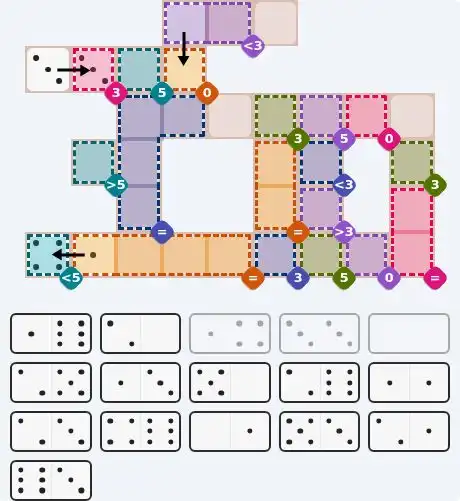
Pips hint for August 2, 2026 โ€“ hard level puzzle grid with critical first placements and strategy

This image shows the initial puzzle grid for the hard level, with a few critical first placements highlighted.

Final Answer: The Solved Grid for Hard Mode
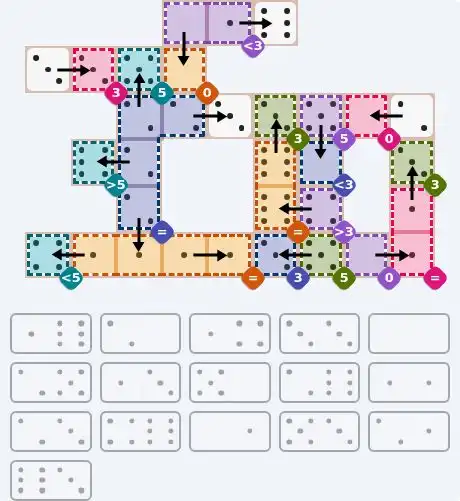
NYT Pips August 2, 2026 hard puzzle full solution grid showing final answer with hints

Compare this final grid with your own solution to see the correct placement of all dominoes.

๐Ÿ”ง Step-by-Step Answer Walkthrough For Easy Level

1
Step 1: Interpret the Sum-1
The sum-1 region covers (0,1), (0,2), (1,1), (1,2). Only one cell can be a 1; the other three must be 0. The [1,1] domino cannot sit fully inside without adding two 1s, so it must straddle the boundary by placing one 1 in the sum-1 and the other in the adjacent empty cell (0,0). Thus [1,1] is placed horizontally at (0,0)โ€“(0,1), giving a 1 to each.
2
Step 2: Fill the Zeros
With (0,1) now a 1, (0,2), (1,1), and (1,2) must be 0. The [0,0] domino can cover two of these; placing it horizontally at (1,1)โ€“(1,2) satisfies that, putting 0 in both cells.
3
Step 3: Resolve the Top Right
Cell (0,2) is the last sum-1 spot needing a 0. The [2,0] domino has a 0 and a 2. The 2 must go to the greater-than-1 cell at (0,3), so place [2,0] horizontally at (0,3)โ€“(0,2) with 2 at (0,3) and 0 at (0,2).
4
Step 4: Bottom Row Arithmetic
The sum-6 region at (2,1)โ€“(2,2) needs a total of 6. The only remaining dominoes with a 3 are [3,5] and [6,3]; each contributes a 3 to a different cell. Place [3,5] horizontally at (2,1)โ€“(2,0) with 3 at (2,1) and 5 at the empty (2,0). Place [6,3] horizontally at (2,3)โ€“(2,2) with 3 at (2,2) and 6 at the greater-5 cell (2,3).

๐Ÿ”ง Step-by-Step Answer Walkthrough For Medium Level

1
Step 1: Sum-8 Vertical Lock
The sum-8 vertical region at (1,3)โ€“(2,3) requires two numbers adding to 8. The only possible placement is the double-4 domino [4,4], giving 4+4. Place it vertically there.
2
Step 2: Zeros from Two Dominoes
The equals region at (0,3)โ€“(0,4) demands identical numbers. No double-zero exists, so zeros must come from two different dominoes. The [0,4] domino placed horizontally at (0,3)โ€“(0,2) supplies a 0 to (0,3) and a 4 to the greater-0 cell (0,2). The [0,3] domino placed vertically at (0,4)โ€“(1,4) gives a 0 to (0,4) and a 3 to the sum-3 cell (1,4).
3
Step 3: Unequal Region โ€“ The 5
The unequal region at (1,1),(1,2),(2,1),(2,2) must have four distinct values. The double-5 domino [5,5] can't fully fit without duplication, so it straddles the greater-3 cell (2,0). Place it horizontally at (2,0)โ€“(2,1), putting 5 in both, satisfying greater-3 and adding the first distinct value to the unequal set.
4
Step 4: Unequal Region โ€“ 6,2,4
Fill the remaining unequal cells: [6,2] goes vertically at (1,2)โ€“(1,1) with 6 above and 2 below. [3,4] goes vertically at (3,2)โ€“(2,2) with 3 in the sum-3 cell (3,2) and 4 in the unequal region. The four distinct values are now 2,6,5,4.
5
Step 5: Right-Side Equals
The equals region at (2,4)โ€“(2,5) needs two identical numbers. The double-3 domino [3,3] fits perfectly. Place it horizontally at (2,4)โ€“(2,5) with 3 and 3.

๐Ÿ”ง Step-by-Step Answer Walkthrough For Hard Level

1
Step 1: Sum-0 and Less-3 Kickoff
The sum-0 cell at (1,3) forces a 0. The less-3 region at (0,3)โ€“(0,4) limits values to 0,1,2. The [0,0] domino placed vertically at (0,3)โ€“(1,3) puts a 0 in both cells, satisfying both constraints simultaneously.
2
Step 2: Sum-3 at (1,1)
Cell (1,1) requires a sum of 3. The only practical way is the double-3 domino [3,3] placed horizontally at (1,0)โ€“(1,1), giving a 3 to (1,1) and a 3 to the empty (1,0).
3
Step 3: Completing the Less-3
With (0,3) as 0, (0,4) still needs a number <3. The [1,6] domino provides a 1 there. Place it horizontally at (0,4)โ€“(0,5), with 1 at (0,4) and 6 at the empty (0,5).
4
Step 4: The 2-Cluster Takes Shape
The equals cluster at (2,2),(2,3),(3,2),(4,2) must all be 2. Use [2,5] vertically at (2,2)โ€“(1,2) giving 2 to (2,2) and 5 to sum-5 (1,2). [2,3] horizontally at (2,3)โ€“(2,4) gives 2 to (2,3) and 3 to empty (2,4). [2,6] horizontally at (3,2)โ€“(3,1) gives 2 to (3,2) and 6 to greater-5 (3,1). [2,1] vertically at (4,2)โ€“(5,2) gives 2 to (4,2) and 1 to the bottom equals (5,2).
5
Step 5: Bottom Equals and Neighbors
The bottom-row equals (5,1)โ€“(5,4) now has (5,2)=1, so all must be 1. [1,4] horizontally at (5,1)โ€“(5,0) gives 1 to (5,1) and 4 to less-5 (5,0). [1,1] horizontally at (5,3)โ€“(5,4) fills the last two 1s. Remaining targets fall: [5,0] vertically at (2,6)โ€“(3,6) for sum-5/less-3; [6,3] horizontally at (3,5)โ€“(2,5) for equals/sum-3; [2,0] horizontally at (2,8)โ€“(2,7) for empty/sum-0; [1,3] horizontally at (4,8)โ€“(3,8) for equals/sum-3; [4,6] horizontally at (4,6)โ€“(4,5) for greater-3/equals; [0,1] horizontally at (5,7)โ€“(5,8) for sum-0/equals; and finally [5,3] horizontally at (5,6)โ€“(5,5) for sum-5/sum-3.

๐Ÿ’ก Pro Tips for Similar Puzzles

Start with Constraints
Always begin with the most constrained regions - sum regions with small numbers or tight spaces.
Use Equal Regions
Use "equal" regions as anchors - they eliminate many possibilities quickly.
Work Systematically
Let the rules guide your placement rather than guessing randomly.
Double-Check
Verify each region's rules are satisfied before moving to the next.

๐ŸŽ“ Keep Learning & Improve