🚨 SPOILER WARNING
This page contains the final answer and the complete solution to today's NYT Pips puzzle. If you haven't attempted the puzzle yet and want to try solving it yourself first, now's your chance!
Click here to play today's official NYT Pips game first.
Want hints instead? Scroll down for progressive clues that won't spoil the fun.
🎲 Today's Puzzle Overview
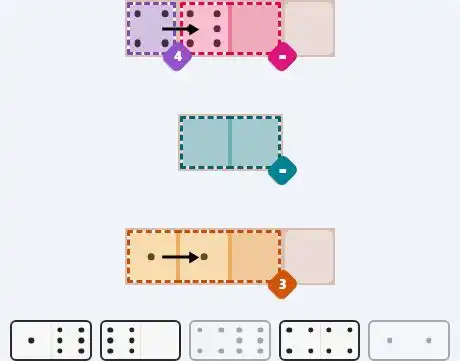
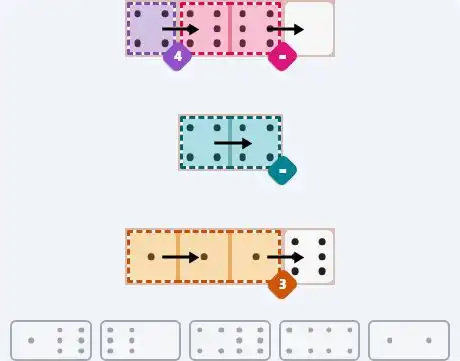
Ian Livengood's easy grid for April 7th is symmetric in a quiet way: two equals regions, two doubles, and a single-cell anchor in the corner that names your opening move. The sum=4 constraint at the top-left corner pins exactly one domino in today's set — only one tile carries a 4-pip face that can reach that position. From there a cascading equals chain fills the top row, a second double drops neatly into the center, and the bottom three-cell sum=3 closes the puzzle with a twist: both of today's doubles contribute to that region, but they only account for two of the three required pips. The last 1-pip has to come from somewhere else.
Ian Livengood's medium for today anchors from the bottom row out. Two isolated single-cell constraints — sum=2 on the left and sum=4 on the right — each demand a specific pip face and immediately name their domino. Those two placements squeeze the three-cell equals region in between them: once one end is fixed at 5, all three cells lock in, and the chain climbs upward through an equals pair, a sum=7 column, and a pair of tight less-than ceilings at the top. The two doubles in today's set play a supporting role rather than a starring one — they fill in the top block only after every other constraint has spoken.
Rodolfo Kurchan's hard puzzle for April 7th is built from the complete set of fifteen non-double dominoes — every possible pairing of two distinct pip values from 0 through 5, used exactly once. That structural fact is the key to the whole puzzle: there are exactly five dominoes that carry a zero-pip face, and the board has exactly five cells that require a pip count of zero. Matching each zero-bearing domino to its cell is the first order of business. Once those five tiles are seated, their non-zero faces hand off specific values to adjacent cells, and a long chain of sum constraints — running across the top row, down both sides, and through the center — resolves every remaining domino without any backtracking.
💡 Progressive Hints
Try these hints one at a time. Each hint becomes more specific to help you solve it yourself!
🎨 Pips Solver
Click a domino to place it on the board. You can also click the board, and the correct domino will appear.
✅ Final Answer & Complete Solution For Hard Level
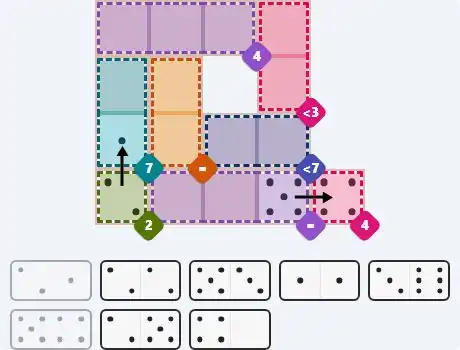
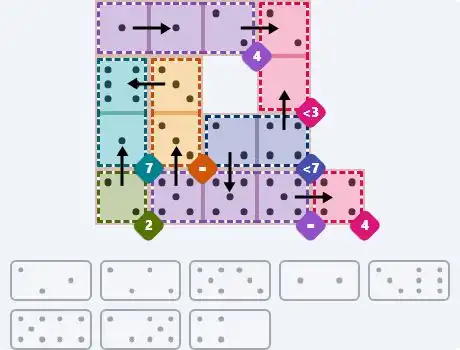
The key to solving today's hard puzzle was identifying the placement for the critical dominoes highlighted in the starting grid. Once those were in place, the rest of the puzzle could be solved logically. See the final grid below to compare your solution.
Starting Position & Key First Steps
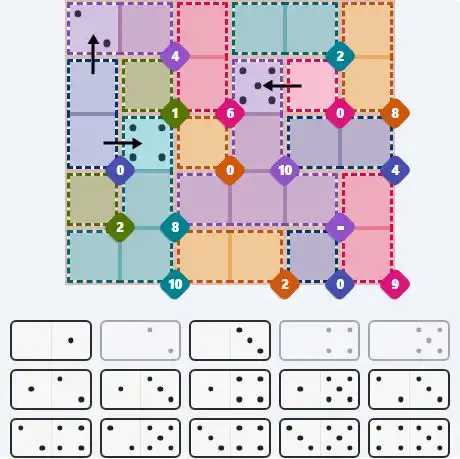
This image shows the initial puzzle grid for the hard level, with a few critical first placements highlighted.
Final Answer: The Solved Grid for Hard Mode
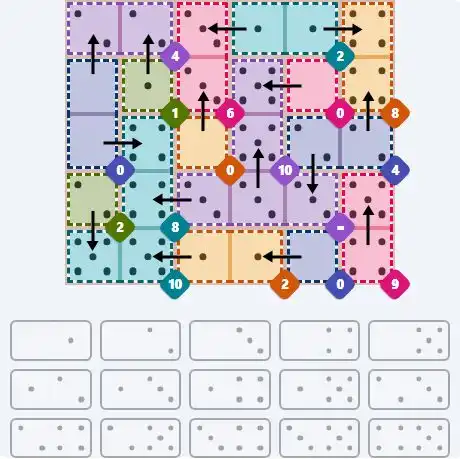
Compare this final grid with your own solution to see the correct placement of all dominoes.
💬 Community Discussion
Leave your comment